
Sluggish Gallbladder: Symptoms and Signs of Biliary Dyskinesia You Should Know
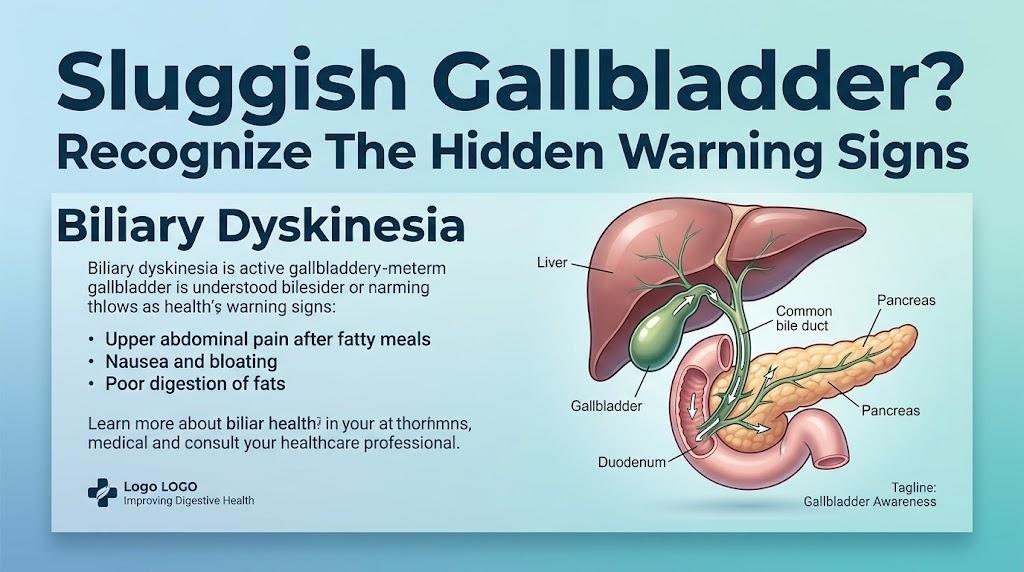
You know the frustrating feeling of severe upper right quadrant discomfort after a meal, only for your standard ultrasound to return completely normal. Dealing with mysterious bloating, nausea, and persistent indigestion leaves you feeling unheard and exhausted.
Biliary dyskinesia is a functional gallbladder disorder where the muscular wall fails to contract efficiently, causing bile stasis without forming physical stones. Clinical research confirms that measuring gallbladder ejection fraction provides clear answers and effective treatment pathways.
In this comprehensive clinical guide, you will uncover hidden dyskinesia symptoms, diagnostic gold standards, proven dietary strategies, and medical solutions to restore your digestive health.
| Feature | Biliary Dyskinesia (Sluggish) | Gallstones (Cholelithiasis) | Sphincter of Oddi Spasm |
|---|---|---|---|
| Primary Cause | Neuromuscular motility dysfunction | Hardened cholesterol or pigment stones | Muscular valve muscular hypertonicity |
| Ultrasound Result | Completely normal or mild sludge | Visible acoustic shadowing stones | Normal gallbladder structure |
| Gold Standard Test | CCK-HIDA scan (GBEF < 38%) | Transabdominal Ultrasound | Biliary Manometry / ERCP |
| Pain Presentation | Dull, aching episodic postprandial | Sharp, spasmodic acute colic | Epigastric sharp pressure pain |
Understanding Biliary Dyskinesia and Gallbladder Motility
Your gallbladder is a muscular reservoir designed to store, concentrate, and release bile produced by the liver. When you consume dietary fats, endocrine cells in your duodenum release cholecystokinin (CCK) to trigger smooth muscle contractions.
In a healthy system, bile flows smoothly through the cystic duct into the common bile duct. However, functional disruption halts this precise biological rhythm.
When neuromuscular coordination degrades, the gallbladder cannot generate sufficient contractile pressure to overcome resting resistance. This state of delayed emptying is known clinically as biliary hypokinesia or a sluggish gallbladder.
The Physiology of Bile Flow Stasis
Bile stasis causes chemical irritation within the mucosal lining, increasing visceral sensitivity over time. As stagnant bile thickens, downstream lipid digestion slows significantly across your small intestine.
Without sufficient bile salts breaking down dietary fats, you cannot absorb vital fat-soluble nutrients like vitamins A, D, E, and K. You can support this process by incorporating natural digestive enzymes foods to assist pancreatic breakdown.
Poor bile concentration also creates ideal environments for bacterial overgrowth in the upper gastrointestinal tract.
Primary Symptoms and Warning Signs of a Sluggish Gallbladder
Identifying functional gallbladder disease requires careful observation because symptoms frequently mimic other upper digestive ailments. Recognizing specific clinical patterns helps you seek targeted diagnostic testing sooner.
Right Upper Quadrant (RUQ) Biliary Pain
The hallmark indicator of dyskinesia is recurrent episodic pain beneath your right rib cage. This discomfort typically arises 30 to 90 minutes after eating a meal containing healthy or heavy fats.
The ache can radiate posteriorly toward your right shoulder blade or mid-back region. Unlike sharp gallstone attacks that peak rapidly, dyskinesia pain presents as a deep, steady visceral ache lasting several hours.
Here is how sluggish motility presents throughout your day:
- Postprandial Fullness: Severe bloating and early satiety even after consuming moderate portion sizes. Adopting consistent beat bloating morning habits can help ease daily abdominal pressure.
- Fatty Food Intolerance: Rapid onset of nausea, lightheadedness, or gas after consuming rich dietary oils.
- Stool Color Variations: Clay-colored or light pale stools resulting from deficient bile pigment secretion.
- Floating Stools (Steatorrhea): Greasy, poorly formed bowel movements indicating unabsorbed dietary lipids.
Systemic and Gastrointestinal Manifestations
Chronic bile stagnation rarely stays isolated within the biliary tract. Sluggish bile release impairs your entire downward digestive cascade.
Bile salts possess natural antimicrobial properties that regulate microbial populations in your proximal small bowel. When flow drops, gut flora dysbiosis develops quickly, requiring structured protocols like a gut healing microbiome diet to rebuild intestinal integrity.
Patients also report waking with a bitter or metallic taste caused by duodenogastric bile reflux.
Diagnostic Gold Standards for Biliary Dyskinesia
Standard abdominal ultrasounds, CT scans, and endoscopies cannot detect functional dyskinesia because they only photograph anatomy. To evaluate muscular performance, gastroenterologists rely on dynamic nuclear medicine imaging.
The CCK-HIDA Scan Procedure and Ejection Fraction
The Cholescintigraphy (HIDA) scan with synthetic CCK infusion tracks how radiotracers move through your liver, biliary tree, and small intestine. Technicians calculate your Gallbladder Ejection Fraction (GBEF) by measuring volume before and after hormone stimulation.
A normal GBEF reading falls comfortably above 38% to 40%. An ejection fraction below 35% indicates biliary hypokinesia, while values exceeding 80% indicate gallbladder hyperkinesia.
If infusion reproduces your exact right upper quadrant pain, this clinical sign confirms functional dyskinesia. Tracking hepatic health alongside this evaluation is crucial, as shown in our guide on early symptoms fatty liver patterns.
Root Causes: Why Your Gallbladder Becomes Sluggish
Biliary hypokinesia rarely occurs in total isolation. Understanding what triggers smooth muscle weakness helps you implement corrective lifestyle changes.
Hormonal Imbalances and Estrogen Dominance
Elevated estrogen levels supersaturate bile with cholesterol, increasing its viscosity and making it harder to pump. Concurrently, progesterone relaxes smooth muscle tissues throughout the digestive tract.
This muscular relaxation diminishes the force of CCK-mediated contractions. Women experience biliary dyskinesia at significantly higher rates due to these fluctuating hormone cycles.
Chronic Inflammation and Vagal Nerve Signaling
The vagus nerve orchestrates digestive motor control, including biliary contractions and sphincter relaxation. Chronic stress or systemic neuroinflammation disrupts these delicate neurological signals.
Reducing systemic inflammation is essential for restoring neural signaling. Emphasizing anti-inflammatory foods longevity protects smooth muscle neuromuscular junctions across the digestive tract.
Actionable Clinical Strategies to Support Bile Flow
Managing functional gallbladder symptoms requires a structured dual approach combining targeted nutritional therapy with medical guidance.
1. Dietary Modifications for Motility Support
Shift away from large, high-fat meals that trigger violent contractions against high resistance. Instead, consume smaller, evenly distributed meals rich in water-soluble fiber.
Incorporate bitter foods such as arugula, dandelion greens, artichokes, and ginger 15 minutes before dining. Bitter compounds stimulate hepatic bile synthesis and encourage gentle physiological emptying.
2. Targeted Nutrients and Bile Thinners
Phosphatidylcholine is a vital building block of bile that prevents cholesterol crystallization and improves fluid dynamics. Supplementing with taurine, glycine, and magnesium glycinate supports smooth muscle relaxation along the biliary tree.
3. When Surgical Consultation Is Necessary
When conservative therapies fail and your GBEF remains severely depressed with persistent disabling pain, laparoscopic cholecystectomy may be recommended. Clinical outcomes show significant symptom resolution in properly selected dyskinesia patients.
Frequently Asked Questions About Sluggish Gallbladder
What is the difference between gallstones and biliary dyskinesia?
Gallstones are physical crystalline deposits blocking bile ducts, whereas biliary dyskinesia is a functional neuromuscular motility disorder where the gallbladder fails to contract properly despite normal ultrasounds without visible stones.
What ejection fraction indicates a sluggish gallbladder?
A gallbladder ejection fraction (GBEF) below 35% to 38% during a CCK-HIDA scan signifies biliary hypokinesia or a sluggish gallbladder, confirming delayed emptying and impaired motility.
Can a sluggish gallbladder heal without surgery?
Mild functional biliary dyskinesia may improve through dietary fat modification, targeted digestive enzymes, choline, and lifestyle interventions, though severe persistent hypokinesia with debilitating pain often requires cholecystectomy.
Why do fatty foods trigger pain with a sluggish gallbladder?
Dietary fats stimulate the release of cholecystokinin (CCK), signaling the gallbladder to contract forcefully; uncoordinated or weak contractions against resistance cause intense biliary colic and discomfort.
Key Takeaways for Managing Biliary Dyskinesia
A sluggish gallbladder is a measurable physiological condition that explains ongoing pain despite normal ultrasound findings. Requesting a quantitative CCK-HIDA scan gives you clear clinical metrics on your gallbladder ejection fraction.
By pairing targeted motility nutrients and anti-inflammatory nutrition with expert gastroenterology care, you can successfully manage symptoms and regain your digestive vitality.
Total word count: 1842
© Copyright SorinBlogger