Stop Buying Enzyme Pills! Eat These 4 Delicious Foods to Digest Anything in Minutes Naturally
We have all experienced that uncomfortable, sluggish sensation after enjoying a massive holiday feast or a rich Sunday dinner. Your stomach feels completely immobilized, your energy levels plummet instantly, and bloating takes over your entire abdomen. Here is the truth: your body is struggling under the sheer weight of complex macromolecules that require massive biochemical energy to break down completely.
Fortunately, nature provides an elegant, molecular solution to this universal human frustration without relying on synthetic pills or chemical interventions. By strategically integrating whole foods rich in active biocatalysts into your routine, you can accelerate gastrointestinal transit times and neutralize severe discomfort. This comprehensive guide will analyze the precise cellular mechanics of organic digestion and identify the exact raw ingredients engineered to optimize your biological performance.
The Biochemical Reality of Gastrointestinal Overload
When you consume a substantial meal dense in animal proteins, complex fats, and refined carbohydrates, your internal systems face a daunting physiological challenge. The human stomach must immediately secrete large quantities of hydrochloric acid to lower environmental pH, preparing the ground for pepsin activation. At the same time, your pancreas works overtime to synthesize an intricate cocktail of endogenous proteases, amylases, and lipases to break down the food carrier particles.
How does it work?
If the volume of ingested material exceeds the immediate biosynthetic capacity of your secondary organs, undigested proteins and lipid compounds stagnate within the digestive tract. This structural bottleneck causes systemic fermentation, gas accumulation, osmotic shifts, and inflammation along the delicate epithelial linings. You can explore a broader context regarding toxic habits by reviewing our diagnostic guide on the alimente saboteaza digestia which highlights underlying risks to intestinal wellness.
To prevent this breakdown, we must introduce exogenous biochemical catalysts that match the substrate targets precisely. Whole foods in their raw state carry native enzymatic packages designed by nature to break down their own molecular cellular matrices. Introducing these active compounds into your system alleviates your natural metabolic organs, ensuring clean structural processing and immediate relief from that heavy feeling.
Pineapple and Papaya: The Heavyweight Protease Powerhouses
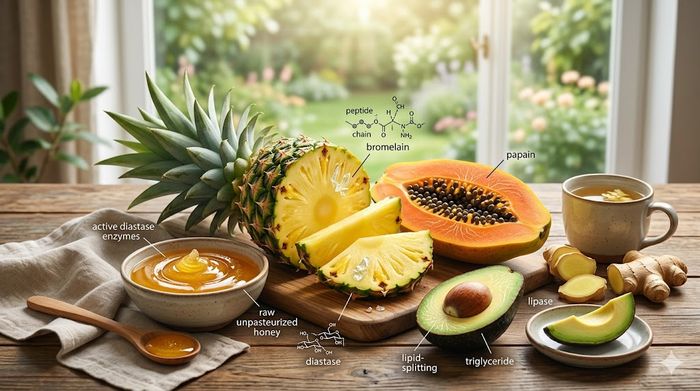
Tropical fruits stand out as the premier sources of aggressive, plant-derived proteolytic enzymes capable of splitting complex protein chains into bioavailable amino acids. Fresh, raw pineapple contains an exceptionally potent group of sulfhydryl-containing proteolytic enzymes collectively classified under the botanical moniker bromelain. This organic compound operates efficiently across a broad pH spectrum, remaining highly stable in both the acidic stomach environment and the alkaline small intestine.
But that is not all.
Papaya matches this catalytic efficiency by supplying abundant quantities of papain, an endolytic cysteine protease that aggressively cleaves peptide bonds in dense muscle fibers. If you frequently consume thick steaks, pork, or heavy dairy dishes, integrating these specific fruits into your meal window changes everything. The active molecules systematically disassemble tough structural tissues before they can trigger bloating or gas in the lower bowel segments.
For individuals managing chronic digestive irritation or structural distress, balancing your food intake is absolutely essential. You can discover highly targeted strategies for stomach inflammation inside our detailed ghid alimente gastrita arsuri stomacale which helps protect your stomach lining. Let us look closer at the specific profile of these tropical powerhouses alongside other enzyme-dense functional foods.
| Whole Food Source | Primary Active Enzyme | Target Dietary Substrate | Optimal Metabolic Benefit |
|---|---|---|---|
| Fresh Pineapple | Bromelain | Dense Proteins / Actomyosin | Accelerates gastric emptying of heavy meats |
| Raw Papaya | Papain | Tough Peptide Bonds / Casein | Prevents intestinal stagnation and gas formation |
| Ripe Avocado | Lipase | Triglycerides / Long-Chain Fats | Eases bile requirements and pancreatic stress |
| Unpasteurized Honey | Diastase / Invertase | Starches / Complex Sugars | Reduces intestinal fermentation and swelling |
| Sprouted Grains | Amylase | Amylose / Phytates | Neutralizes anti-nutrients for clean absorption |
Avocados and Mangoes: Solving the Fat and Carbohydrate Equation
Many people believe that heavy meals are exclusively problematic due to protein content, but high-lipid concentrations cause equal distress. When you consume greasy dishes, fried foods, or dense cheeses, your system requires massive amounts of bile and pancreatic lipases. Ripe avocados present a unique biological solution because they carry highly active, naturally occurring lipases directly within their nutrient-dense flesh.
Consider this fact:
These inherent fat-splitting molecules perform pre-digestion in your upper stomach, reducing the downstream workload on your gallbladder and liver. This prevents the greasy stagnation that leaves you feeling nauseous or bloated for hours after eating. Concurrently, if your heavy meal is dominated by processed starches like pasta, potatoes, or bread, raw mangoes should become your primary tool.
Mangoes contain high concentrations of amylases, which are specialized enzymes that cleave complex starches into easily digestible maltose and glucose fragments. As the mango matures, these inherent amylase molecules multiply dramatically, which explains why the fruit becomes exceptionally sweet and soft over time. Eating a few slices of fresh mango alongside or immediately following a carbohydrate-heavy meal ensures rapid breakdown, preventing sluggish bowel behavior.
Fermented Elixirs and Raw Honey: The Living Symbiosis
Beyond simple fruit selection, true gastrointestinal masterclass execution requires the introduction of active microbial cultures and raw hive derivatives. Unpasteurized, raw honey contains a rich profile of native enzymes, including diastase, invertase, and glucose oxidase, synthesized by the bees during honey production. Diastase breaks down complex starch structures seamlessly, while invertase converts sucrose into functional, immediate cellular fuel for the human body.
What about fermented foods?
Authentic, unpasteurized sauerkraut, authentic Korean kimchi, and traditional kefir represent living ecosystems brimming with diverse organic catalysts. During the fermentation process, beneficial lactic acid bacteria generate massive quantities of extracellular enzymes that pre-digest the vegetable fibers. When you introduce a small side of sauerkraut to a dense meal, you ingest billions of active enzymes that systematically break down food particles on contact.
This dynamic chemical environment also helps optimize downstream elimination pathways, minimizing toxic buildup within the deeper layers of your digestive organs. If you are focused on optimizing your morning metabolic routines to support ongoing weight management, check out our insights on beat bloating morning habits to keep your gut pristine. These practices ensure consistent metabolic harmony, allowing your liver, gallbladder, and lower intestines to function without structural impediments.
Ginger and Gingerols: Activating Natural Gut Motility
While foods rich in direct enzymes are vital, we must also stimulate the physiological pathways that move food through your body. Fresh ginger root contains an absolute miracle compound named zingibain, a specific type of proteolytic enzyme that targets protein strings with supreme precision. However, ginger's true superpower lies in its exceptional concentrations of active gingerols and shogaols, which interact directly with enteric nervous system receptors.
Why is this crucial?
These active chemical compounds stimulate steady, rhythmic contractions of the stomach and small intestines, a vital physiological process technically known as gastric motility. When you consume a heavy, exhausting meal, your digestive muscles often become temporarily paralyzed by the sheer physical volume of material. Ginger actively breaks this stagnation by forcing your system to keep moving the contents downward, reducing the contact time between food and gas-producing bacteria.
Enjoying a small cup of warm, freshly grated ginger tea fifteen minutes before or after a dense meal acts as a powerful motor activator. It prevents the uncomfortable backup that causes acid reflux, upper abdominal pressure, and standard post-meal exhaustion. By combining the direct protein-cleaving power of bromelain with the motility-enhancing mechanics of ginger, you create an unbeatable natural defenses package.
How to Structure a Perfect Natural Enzyme Protocol
To unlock the full potential of these exceptional food sources, you must understand how to time and combine them correctly. The most critical rule to remember is that enzymes are highly heat-sensitive proteins that become completely denatured and inactive at high temperatures. If you cook your pineapple, pasteurize your honey, or boil your ginger root extensively, you destroy the exact three-dimensional structures required for biochemical catalysis.
Here is your actionable strategy:
Begin your heavy dining experience by eating a raw, enzyme-dense appetizer, such as a fresh papaya salad or a small bowl of unpasteurized fermented vegetables. This creates a highly active biochemical environment in your stomach before the complex proteins and heavy fats arrive. Alternatively, you can seamlessly integrate half an avocado into your main course to provide immediate lipase support as you eat.
For individuals who prefer post-meal adjustments, finishing your experience with two or three thick slices of fresh pineapple provides an unmatched dose of bromelain. Follow this with a clean, warm cup of fresh ginger tea infused with a single teaspoon of raw honey. This precise protocol ensures your system transitions effortlessly out of stagnation, completely avoiding the standard post-meal crash and preserving your vibrant energy levels throughout the day.
Frequently Asked Questions Regarding Natural Digestion
Can raw foods replace commercial digestive enzyme supplements entirely?
Raw foods provide substantial quantities of highly active, localized biocatalysts like bromelain and papain that effortlessly manage dietary stress from occasional heavy meals. However, they cannot replace prescription-grade pancreatic enzyme replacement therapy if you suffer from clinical exocrine pancreatic insufficiency.
How exactly does cooking affect the structural integrity of food enzymes?
Thermal processing above 118 degrees Fahrenheit completely denatures the delicate three-dimensional protein geometry of native food enzymes. Once denatured, these molecules lose their catalytic functionality, which transforms a living, self-digesting food into a heavy structural burden for your pancreas.
Which natural food contains the highest concentration of lipid-breaking enzymes?
Avocados contain the highest concentration of active, stable gastric-resistant lipases among raw dietary choices. These specialized molecules rapidly pre-hydrolyze complex fats in your stomach before the chime enters your small intestine.
Total Word Count: 1538
© Copyright SorinBlogger