
1. The Hormonal Shield: Estrogen vs. Testosterone
The most profound reason for the discrepancy in heart aging lies in our hormones. For decades, scientists have observed that pre-menopausal women have significantly lower rates of heart disease compared to men of the same age. The "guardian angel" here is estrogen. This hormone helps keep the inner lining of the arteries flexible, allowing them to relax and expand to accommodate blood flow.
Men, dominated by testosterone, lack this high-level intrinsic protection. While testosterone is essential for muscle mass and energy, it does not offer the same vascular elasticity benefits as estrogen. Furthermore, as men age and testosterone levels naturally decline, this can sometimes correlate with increased abdominal fat, a known risk factor for heart issues. Understanding heart rhythm issues and hormonal impacts is crucial for early detection.
According to research from major institutions like the Harvard Medical School, the loss of estrogen after menopause eventually puts women at equal risk, but men have already been accumulating vascular damage for decades by that point.
2. Vascular Stiffness: The Silent Ager
The hallmark of a rapidly aging heart is arteriosclerosis, or the stiffening of the arteries. Think of a garden hose: when it is new, it is flexible and handles water pressure changes easily. As it ages, it becomes brittle. In men, this process of arterial stiffening begins much earlier.
Stiffer arteries force the heart to pump harder to push blood through the body. This constant resistance leads to Left Ventricular Hypertrophy (LVH), where the heart's main pumping chamber thickens and becomes less efficient. This is a primary precursor to heart failure. Monitoring your numbers is essential; if you are struggling with hypertension, consult resources on blood pressure management immediately.
Furthermore, the elasticity of the arterial walls relies heavily on collagen and elastin. As we age, these proteins degrade. Interestingly, proper supplementation can sometimes help; learning about arterial elasticity and collagen types is a proactive measure many men overlook.
3. Anatomy: Does Size Matter?
Generally, a man’s heart is larger than a woman’s, weighing about 10 ounces compared to a woman’s 8 ounces. While a larger engine might seem more powerful, in biology, size can be a double-edged sword. The larger muscle mass of the male heart requires more oxygen. When arteries begin to narrow due to plaque (atherosclerosis), the oxygen supply is restricted more critically in a larger heart muscle.
Additionally, the male pattern of heart aging tends to involve a reduction in the number of heart muscle cells (myocytes), but an increase in the size of the remaining cells. This hypertrophy makes the heart stiffer and less able to relax between beats, a condition known as diastolic dysfunction. Data from the Mayo Clinic highlights that this specific type of aging is more prevalent in men under 70 compared to women.
4. The "Man" Factor: Lifestyle and Stress
Biology loads the gun, but lifestyle pulls the trigger. Men have historically had higher rates of smoking and alcohol consumption, both of which are toxic to the cardiovascular system. While these gender gaps are closing, the cumulative damage in older men is evident.
Diet plays a massive role. Men statistically consume more red meat and processed foods, which drives up LDL cholesterol. Excessive intake of these foods can lead to inflammation. Understanding the consequences of red meat consumption is vital for anyone looking to reverse heart aging.
Stress Response: Men and women react to stress differently. Men often exhibit a "fight or flight" response that causes a sharper spike in blood pressure, putting immediate strain on the arterial walls. Chronic stress without release mechanisms accelerates vascular aging. Techniques like managing stress through box breathing can be surprisingly effective in lowering this acute load on the heart.
5. Comparison: Men vs. Women Milestones
To visualize the disparity, let's look at the average timeline of cardiovascular aging.
| Age Group | Men's Heart Status | Women's Heart Status |
|---|---|---|
| 30-40 Years | First signs of arterial stiffening appear. Cholesterol plaque formation often begins. | Protected by high estrogen levels. Arteries remain flexible and clear. |
| 40-50 Years | Risk of heart attack rises. Blood pressure often increases requiring blood pressure management. | Perimenopause begins, but estrogen still offers significant protection. |
| 50-60 Years | Significant structural aging. Left ventricle may thicken. | Menopause causes estrogen drop. Heart disease risk accelerates rapidly to catch up. |
| 65+ Years | Cumulative lifestyle damage manifests as heart failure or CAD. | Risk equals or surpasses men; symptoms often present differently (nausea, fatigue). |
👨⚕️ Specialist Insight
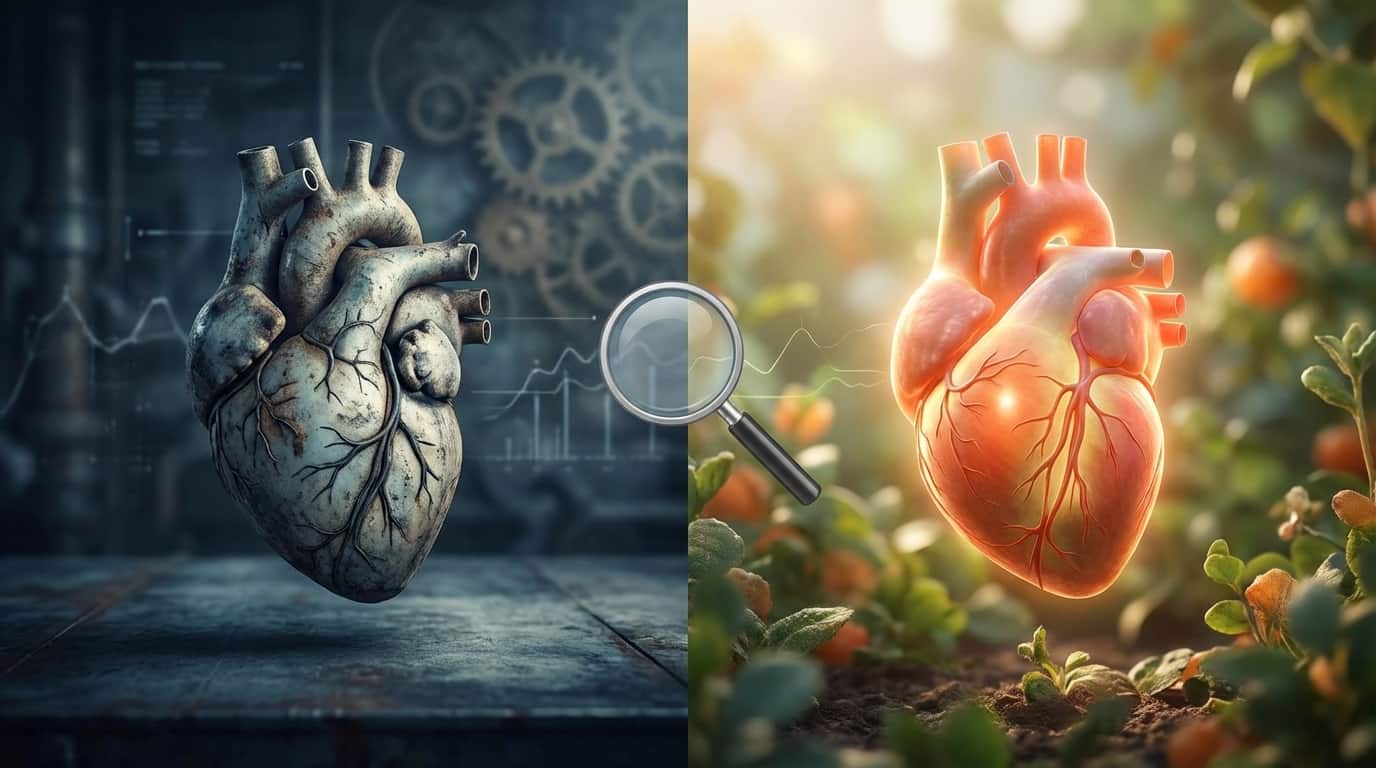
"Don't wait for symptoms. The male heart ages silently. I recommend men start checking their coronary calcium score (a CT scan of the heart) by age 45. This test sees the calcified plaque—the literal 'rust' in your pipes—before a blockage occurs."
6. How to Slow the Clock
The good news is that "faster aging" does not mean "inevitable early death." You can slow the biological clock of your heart through targeted interventions.
1. Adopt a Heart-Smart Diet
Transitioning to a diet rich in omega-3 fatty acids and antioxidants makes arteries more pliable. The gold standard remains the Mediterranean diet, which emphasizes olive oil, nuts, and fish over saturated fats. Additionally, incorporating protective dietary habits can significantly lower inflammation.
2. Exercise for Elasticity
Aerobic exercise is the only known way to physically "soften" stiff arteries. Activities like jogging, swimming, or brisk walking release nitric oxide, a gas that dilates blood vessels. Using a device for monitoring your activity can help ensure you stay in the target heart rate zone for optimal benefit.
3. Metabolic Maintenance
Keep your liver and metabolism in check. A fatty liver often precedes a fatty heart. Consider natural aids for metabolic health, such as specific teas that support liver function and cholesterol regulation.
For more extensive guidelines on physical activity, the American Heart Association provides comprehensive plans tailored for different age groups.
Pros and Cons of Early Heart Screening
| Pros | Cons |
|---|---|
| Detects hidden plaque early. | Can lead to anxiety over minor findings. |
| Allows for lifestyle changes before medication is needed. | Some tests involve small radiation exposure (CT scans). |
| Establishes a baseline for future comparison. | Not always covered by standard insurance packages. |
7. Frequently Asked Questions
At what age should men start worrying about heart aging?
Men should be proactive starting at age 30. While events usually happen later, the biological stiffening begins early. Regular checkups should start by 35.
Can I reverse arterial stiffness?
Yes, to a degree. Significant weight loss, smoking cessation, and consistent aerobic exercise have been shown to improve arterial compliance.
Are there supplements that help?
Magnesium, Omega-3s, and CoQ10 are often recommended for heart health, but you should always consult a doctor before starting any regimen.

8. Final Verdict
The Bottom Line: Men’s hearts do age faster, primarily due to the lack of protective estrogen and earlier onset of vascular stiffness. However, biology is not destiny. By understanding these mechanisms, avoiding smoking, managing stress, and maintaining an active lifestyle, men can bridge this gap. The key is early intervention—treat your heart with care in your 30s and 40s, and it will serve you well into your 80s.
Disclaimer: This article is for informational purposes only and does not constitute medical advice. Always consult with a healthcare professional regarding any medical condition or treatment. Research sources include the CDC and NIH.