How Late-Night Eating Impacts Your Heart
You return home after a long, stressful day and your stomach starts rumbling at 10 PM. It is easy to assume that a late-night trip to the kitchen is completely harmless as long as you stay within your daily calorie goals.
Here is the problem: your body tracks time far more precisely than you realize. Compounding scientific research reveals that matching your food intake with the dark hours of the night creates severe friction inside your cardiovascular system.
This comprehensive guide exposes exactly how late-night eating alters your cardiac rhythm, shifts your blood pressure patterns, and strains your arteries. Read on to uncover the biological shifts taking place inside your chest every time you eat close to bedtime.
The Circadian Alignment Dilemma
Every single organ system in your body operates on a built-in 24-hour cycle known as a circadian rhythm. Your brain possesses a master clock that responds to light, while peripheral clocks govern individual organs like your stomach, liver, and blood vessels.
During daytime hours, your biology is perfectly optimized for nutrient digestion, hormone secretion, and high physical activity. When darkness falls, your cardiovascular system expects a prolonged phase of fasting so it can transition into structural repair and deep rest.
How does it work?
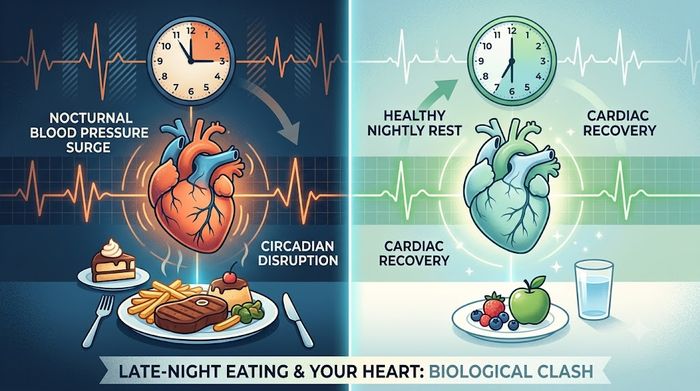
When you flood your stomach with food right before bed, you cause a massive sensory clash between your master clock and your peripheral metabolic clocks. Your digestive system roars to life, releasing insulin and altering enzyme activity when the heart is trying to wind down.
This internal circadian mismatch triggers systemic inflammation, blocks cellular healing, and sets off a chain reaction that directly impacts your arterial walls. Over time, this daily disruption creates micro-damage that accelerates the aging process of your blood vessels.
Nocturnal Blood Pressure Dipping
In healthy individuals, blood pressure naturally drops by 10% to 20% during sleep, a protective mechanism known as nocturnal dipping. This drop gives your blood vessels a much-needed break from the constant hydraulic pressure generated during your waking hours.
Introducing food into your system close to bedtime completely halts this vital cardioprotective dipping mechanism. Digestion requires significant energy, forcing your heart to maintain high cardiac output and blood flow volume while you sleep.
Think about this:
Instead of resting, your heart works overtime to pump blood to the mesenteric arteries surrounding your digestive tract. This elevated nocturnal workload turns you into a non-dipper, a clinical status highly linked to structural heart failure.
When blood pressure remains high throughout the night, the muscular walls of your heart begin to thicken excessively. Cultivating better daytime routines can prevent this issue and assist you in developing habits for a stronger heart over the long term.
Hormonal Imbalance and Arterial Stiffness
Eating late changes how your endocrine system behaves, altering hormones like insulin, cortisol, and melatonin. Midnight meals trigger massive insulin spikes at a time when your muscle tissues are naturally highly insulin resistant.
This means that glucose remains trapped in your bloodstream much longer than it would during the middle of the day. This excess blood sugar directly damages the endothelial lining of your arteries, making them rigid and prone to plaque accumulation.
But that is not all.
Late-night eating elevates cortisol, your body's primary stress hormone, when it should be hitting its lowest daily concentration. High cortisol spikes your resting heart rate and forces your sympathetic nervous system into an unwanted fight-or-flight state.
If you consistently struggle with these hormonal surges, you might notice other structural symptoms such as chronic fatigue or fluid retention. Knowing the 7 signs high cortisol symptoms manifest can help you pinpoint exactly how deep your hormonal disruption goes.
The Metabolic Impact of Late Meals
The physical timing of your nutrition holds significant influence over how your liver processes fats, triglycerides, and cholesterol molecules. When you eat during the daytime, your body converts those calories into immediate energy for your muscles and brain.
When you eat late, your body lacks an immediate energy requirement, leading it to store those nutrients straight as fat. This biochemical process leads directly to visceral adiposity, the dangerous fat that wraps around your vital abdominal organs.
Here is the truth:
Visceral fat acts like an independent endocrine organ, continuously pumping inflammatory proteins called cytokines right into your bloodstream. These cytokines irritate your blood vessels, accelerate plaque development, and dramatically raise your risk of heart attacks.
This shift also increases the accumulation of fat inside your liver cells, causing metabolic slowing and chronic cardiovascular stress. Understanding the early symptoms fatty liver presents can warn you if your late midnight eating habits are starting to damage your internal metabolic organs.
Late-Night Eating vs. Daytime Nutrition
To see how much meal timing alters your primary biological functions, let us look at the operational differences between early and late eating. The table below details exactly how your cardiovascular system behaves depending on when you consume food.
| Biological Function | Daytime Nutrition (Balanced Window) | Late-Night Eating (Close to Bedtime) |
|---|---|---|
| Blood Pressure Shift | Allows natural 10-20% nocturnal dipping to occur seamlessly. | Suppresses nocturnal dipping, forcing sustained arterial pressure. |
| Insulin Sensitivity | High efficiency; rapid clearance of glucose from your bloodstream. | Extremely low; leads to prolonged circulating sugars and arterial damage. |
| Resting Heart Rate | Drops steadily, allowing deep cardiac recovery and muscle repair. | Remains elevated by several beats per minute due to digestive work. |
| Lipid Processing | Converts fats and fatty acids into active, useable day energy. | Triggers triglyceride storage, increasing systemic arterial risks. |
Sleep Fragmentation and the Vagus Nerve
Eating close to your bedtime ruins your sleep architecture by decreasing your time spent in slow-wave deep sleep and REM cycles. Because your body has to work hard to digest food, you experience frequent micro-arousals that pull you out of deep sleep.
This sleep fragmentation directly impairs your vagus nerve, the primary nerve responsible for controlling your parasympathetic nervous system. A healthy vagus nerve calms your heart rate, lowers blood pressure, and helps your heart maintain high heart rate variability.
What happens next?
When sleep fragmentation dampens your vagal tone, your heart loses its primary protective braking system. Your heart rate remains locked in an elevated state all night, which slowly weakens your cardiac muscle tissue over time.
To counter this specific type of nerve fatigue, you can practice calming evening habits to stimulate your parasympathetic system. Learning how to apply specialized vagus nerve hacks for longevity can keep your heart rate safe, even when managing evening stress.
How to Break the Late-Night Eating Cycle
Transitioning away from late-night eating requires a deliberate mix of environmental design, habit shifts, and proper daytime nutrition tracking. Your goal is to make fasting during the evening hours effortless for both your mind and your stomach.
First, evaluate your total protein intake during your daytime meals. Eating enough high-quality protein during breakfast and lunch stabilizes your blood sugar and stops the intense cravings that pop up at 9 PM.
Second, set a strict digital kitchen alarm or a firm curfew for food, closing down your kitchen at least three hours before bed. If you need something to hold you over, replace heavy snacks with warm, caffeine-free herbal teas like chamomile or ginger.
Finally, address any underlying emotional stress or bedtime anxiety that might be masquerading as late-night physical hunger. Shifting your focus toward building a calming nighttime routine can help lower your cortisol and make you feel secure without relying on food.
By taking control of your evening meal timing, you give your cardiovascular system the rest it needs to stay healthy. Protecting your sleep window preserves your heart health and ensures you feel energetic every single day.
Cardiovascular Health Questions Answered
Why does eating right before bed cause heart palpitations?
Eating a heavy meal right before bed triggers a massive redirect of blood flow to your digestive tract, forcing your heart to pump harder and faster. Additionally, high-sodium or high-sugar foods eaten late cause sudden spikes in blood sugar and blood pressure, which can induce physical heart palpitations and increase midnight restlessness.
How many hours before sleep should you stop eating for optimal heart health?
To keep your cardiovascular system protected, you should finish your last meal at least three to four hours before you go to sleep. This timeframe allows your blood sugar to stabilize, lets your core body temperature drop naturally, and ensures that your biological clock initiates its essential nightly cardioprotective blood pressure dipping process.
Can a small healthy snack before bed still damage your cardiovascular system?
A tiny, low-glycemic, low-calorie snack under 150 calories will not destroy your cardiovascular health, especially if your body genuinely requires fuel. The significant damage stems from large, complex, calorie-dense meals that disrupt insulin patterns and force your body to handle heavy metabolic processing when your heart should be resting.
Word Count: 1538
© Copyright SorinBlogger