Healthy Meals for Weight Loss That Keep You Full
You want to drop unwanted pounds, but constantly dealing with a growling stomach makes staying consistent feel almost impossible. Cutting calories usually leads to intense cravings, low energy levels, and mid-afternoon kitchen raids that derail your progress.
You can burn fat rapidly without enduring constant hunger or eating tiny, depressing portions. By shifting your focus toward nutritional density and physiological satiety, you can eat satisfying portions that keep your stomach full while forcing your body to burn stored fat for energy.
Here is the exact blueprint for building high-satiety plates, leveraging high-volume ingredients, and mastering fat-loss nutrition without sacrificing flavor or fullness.
| Meal Type | Primary Satiety Driver | Average Calories | Fullness Duration |
|---|---|---|---|
| High-Protein Power Bowl | Chicken Breast + Quinoa + Fiber | 400 - 450 kcal | 4 to 5 Hours |
| Volume Veggie Stir-Fry | Tofu/Shrimp + Broccoli + Cauliflower Rice | 300 - 350 kcal | 3.5 to 4.5 Hours |
| Fiber-Rich Salmon Plate | Wild Salmon + Roasted Brussels Sprouts | 480 - 520 kcal | 5 to 6 Hours |
| Egg White & Lean Beef Skillet | 96/4 Lean Ground Beef + Spinach | 380 - 420 kcal | 4 to 5 Hours |
The Science of Satiety: Why Calorie Quality Trumps Quantity
Weight loss strictly requires a caloric deficit, but your brain does not directly count calories. Instead, your biological hunger signals depend on gastric distension, peptide release, and circulating blood glucose balance.
When you consume refined carbohydrates or processed foods, your digestive system breaks them down almost instantly. This causes a rapid spike in blood sugar followed by an aggressive insulin response, leading to a sudden energy crash.
That crash triggers ghrelin release, the primary hunger hormone that demands immediate energy intake. You feel starved even if you just consumed 600 calories worth of processed snacks.
Here is the truth:
To silence persistent hunger, your meals must activate three distinct satiety pathways simultaneously:
- Physical stretch receptor activation inside the stomach lining through high-volume bulk.
- Hormonal suppression of ghrelin via concentrated dietary protein.
- Delayed gastric emptying driven by viscous soluble and insoluble dietary fibers.
When these pathways align, your brain receives powerful, continuous feedback that you are completely nourished. Starting your morning with a protein breakfast fat torch routine sets a stable glycemic baseline that controls appetite for the remainder of your day.
The Three Core Pillars of Satiating Weight Loss Meals
Building meals that actively destroy hunger requires a deliberate ratio of macronutrients and structural volume. Every main meal on your weekly menu should include three fundamental components.
1. High-Biological-Value Lean Protein
Protein possesses the highest Thermic Effect of Food (TEF) among all macronutrients, meaning your body expends roughly 20% to 30% of the protein calories simply breaking them down. Furthermore, protein triggers peptide YY (PYY) and GLP-1, hormones that communicate satiety directly to your hypothalamus.
Aim for 30 to 50 grams of lean protein per meal. Excellent options include boneless skinless chicken breast, turkey, 96/4 lean ground beef, wild-caught cod, egg whites, non-fat Greek yogurt, and organic firm tofu.
2. Viscous Dietary Fiber & Complex Carbohydrates
Fiber acts as a natural bulking agent in your stomach. Soluble fiber absorbs water, transforming into a gel-like substance that drastically slows down the passage of food through your intestinal tract.
Insoluble fiber adds dense physical mass to your meals without adding digestible calories. Focus on dark leafy greens, cruciferous vegetables, berries, lentils, black beans, and sweet potatoes.
3. High-Water Volume Ingredients
Water adds significant weight and volume to food without contributing a single calorie. Eating foods with high water content tricks your mechanoreceptors into signalling fullness much earlier during the meal.
Zucchini, cucumbers, tomatoes, cauliflower, spinach, and bell peppers allow you to fill an entire 10-inch dinner plate for less than 100 calories. Pairing these with smart snacks like high volume low calorie snacks creates a seamless strategy for suppressing appetite between major meals.
5 High-Volume Meal Frameworks That Keep You Stuffed
You do not need to follow overly complicated culinary steps to enjoy delicious, fat-melting dishes. These five flexible meal frameworks offer maximum volume, robust flavor, and exceptional hunger control.
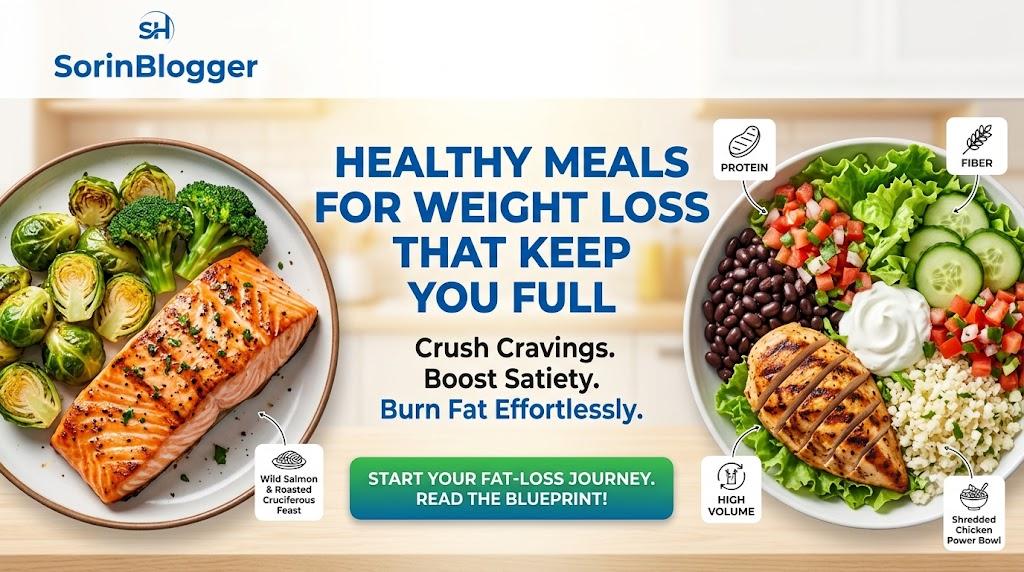
Framework 1: The Massive Shredded Chicken Power Bowl
Combine 6 ounces of seasoned grilled chicken breast with a massive base of shredded romaine lettuce, warm cauliflower rice, and half a cup of warm black beans. Top with diced cucumbers, pico de gallo, and two tablespoons of light sour cream or plain Greek yogurt.
How does it perform?
This meal delivers over 45 grams of protein and 12 grams of fiber for under 400 total calories. The physical volume matches that of a commercial fast-food burrito bowl, but with less than half the caloric density.
Framework 2: The Satiety-Packed Turkey & Vegetable Skillet
Brown 6 ounces of 93/7 lean ground turkey in a non-stick pan seasoned with garlic, smoked paprika, cumin, and sea salt. Toss in two cups of chopped zucchini, sliced bell peppers, and fresh baby spinach until fully wilted.
Serve this stir-fry directly over a small serving of brown rice or shirataki noodles. It yields a deep, hearty bowl packed with savory juices and essential micronutrients.
Framework 3: Wild Salmon & Roasted Cruciferous Feast
Bake 5 ounces of wild Alaskan salmon alongside two full cups of halved Brussels sprouts and broccoli florets tossed in lemon juice and a touch of olive oil. The healthy omega-3 fatty acids in salmon slow gastric motility, keeping hunger at bay for up to six hours.
This nutrient-dense combination provides healthy fats, fat-burning proteins, and abundant fiber. Preparing this dish fits seamlessly into clean eating dinner recipes 30 min structured routines for busy weeknights.
Framework 4: High-Protein Egg White & Spinach Omelet Stack
Whip 1 cup of liquid egg whites with 1 whole large egg. Pour into a hot skillet with sliced mushrooms, cherry tomatoes, and two cups of fresh spinach.
Fold the massive omelet over 1 ounce of low-fat mozzarella cheese and serve alongside two slices of toasted sprouted grain bread. You get a gigantic breakfast containing 38 grams of pure protein for less than 350 calories.
Framework 5: Mediterranean Lean Beef & Cucumber Salad
Grill 5 ounces of sirloin steak strips, seasoned with oregano, lemon, and sea salt. Lay the steak over a bed of diced English cucumbers, red onion, kalamata olives, and chopped parsley.
Drizzle with a light dressing made from red wine vinegar and extra virgin olive oil. The high iron and protein density of lean beef paired with hydrating cucumbers yields a crisp, extraordinarily filling lunch.
Actionable Meal Prep Hacks to Guarantee Long-Term Success
Consistency beats perfection every single time in fat loss. Having high-satiety meals prepped and ready prevents impulsive food choices when real-world stress and hunger collide.
Here is how to optimize your weekly prep:
- Batch-cook lean proteins twice weekly using simple, versatile dry rubs so they do not dry out in refrigeration.
- Pre-chop high-water vegetables like zucchini, bell peppers, and broccoli so they are instantly accessible for high-volume meals.
- Keep low-calorie sauces on hand, such as hot sauce, mustard, sugar-free barbecue sauce, and lemon juice, to add intense flavor without hidden calories.
Integrating structured options like a 7 day clean eating plan keeps your grocery budget controlled and eliminates decision fatigue. Keeping convenient options like high protein clean snacks top choices around guarantees that you never slip up during chaotic afternoons.
Frequently Asked Questions
What macronutrients are most effective for keeping you full while losing weight?
Protein and dietary fiber are the most effective macronutrients for satiety. Protein slows digestion and lowers hunger hormones like ghrelin, while soluble fiber adds bulk in the stomach and delays gastric emptying, ensuring long-lasting fullness on fewer calories.
Can you lose weight without feeling hungry all day?
Yes, you can easily lose weight without persistent hunger by focusing on high-volume, low-calorie foods. Eating nutrient-dense options rich in water, fiber, and lean protein expands stomach volume and stabilizes blood sugar, preventing energy crashes and intense cravings.
How does volume eating help with sustainable weight loss?
Volume eating works by filling your stomach with high-water, high-fiber foods that physically trigger stretch receptors. These stretch signals prompt your brain to release satiety hormones, making you feel completely satisfied while maintaining a strict energy deficit.
What is an ideal meal structure to prevent late-night cravings?
An ideal meal consists of 30 to 40 grams of lean protein, 10 to 15 grams of dietary fiber, and a moderate portion of healthy fats. This macronutrient combination stabilizes blood glucose, slows down overall digestion, and keeps appetite hormones balanced throughout the evening.
Verdict: Sustainable Weight Loss Doesn't Require Starvation
Losing fat does not mean eating micro-portions or battling constant hunger pangs. By prioritizing lean proteins, high-water vegetables, and viscous fiber, you can enjoy massive, satisfying meals that trigger biological satiety signals while keeping your body in a consistent fat-burning calorie deficit. Build your plates around volume and protein, stay consistent with weekly preparation, and watch your body transform without suffering through hunger.
Total word count: 1842
© Copyright SorinBlogger