Why Is Your Hair Falling Out? How to Pinpoint the Exact Nutrient Deficiencies Behind It
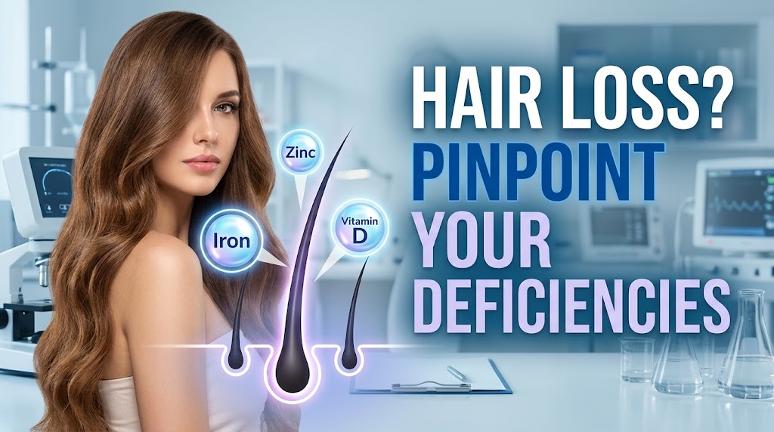
You look down at your shower drain and freeze. A heavy cluster of loose strands sits over the metal grate.
You run your fingers through your scalp. More hair comes away with zero resistance.
Here is the truth: your hair is rarely falling out because of bad luck or generic genetics. Most sudden, diffuse shedding traces back to cellular starvation inside the dermal papilla.
The Biology of Follicle Starvation: Why Your Body Drops Hair First
Hair matrix cells rank among the fastest-dividing tissues in your entire body. They demand continuous fuel, ATP, and structural micronutrients to sustain the active growth cycle known as the anagen phase.
Yet hair is non-essential for immediate physical survival. When vitamins and minerals deplete, your central biology performs brutal biological triage.
Your heart, brain, and liver seize every available nutrient. Your hair follicles get cut off completely, prematurely throwing growing roots into the resting telogen effluvium phase.
The Anagen-to-Telogen Premature Shift
Under healthy systemic conditions, roughly 85% to 90% of your follicles sit actively in anagen. They stay locked in this productive state for anywhere from two to six years.
Deprive those roots of key enzymatic catalysts, and cell division halts instantly. The bulb detaches from its dermal blood supply and shrinks into a club hair.
Because this mechanical shift takes 60 to 90 days to physically fall out, today's shedding reflects deficiencies that began months ago.
Ferritin and Iron: The Oxygen Engine Behind Keratin Synthesis
Most medical providers run a basic Complete Blood Count (CBC) and pronounce your iron levels normal. That mistake costs patients years of preventable hair loss.
Hemoglobin measures circulating red blood cells needed to keep you conscious. Serum ferritin measures your stored iron reserves deep inside your liver, spleen, and bone marrow.
If your digestive tract cannot assimilate raw minerals, your storage drops like a stone. When that happens, look directly at strategies to repair gut lining nutrient intake to prevent malabsorption at the intestinal border.
The Critical Ferritin Threshold for Trichological Health
Clinical laboratories frequently state that 15 ng/mL is normal. That reference range keeps you alive, but it suffocates your hair strands.
Clinical trichologists demand a baseline serum ferritin level of at least 50 ng/mL to stop shedding. You need a sustained level between 70 and 90 ng/mL to spark strong, terminal regrowth.
Iron powers ribonucleotide reductase, an essential enzyme responsible for producing the building blocks of hair follicle DNA. Without it, new cellular division flatlines.
Zinc and Copper Balance: The Cellular Division Trigger
Zinc serves as an indispensable structural cofactor for over three hundred different metabolic enzymes. It regulates hair tissue remodeling, accelerates DNA synthesis, and maintains the oil glands surrounding each follicle.
When zinc levels drop, the structural protein matrix weakens. Your strands split easily, miniaturize, and slip out of the scalp pocket prematurely.
Be careful before loading up on random mineral supplements. Zinc competes directly with copper for intestinal uptake pathways, which requires exact balancing.
Spotting Zinc Deficiency in Daily Life
A deficiency does not just show up on your scalp. It announces itself through telltale physical clues across your body.
- Punctate leukonychia (small white spots scattered across your fingernails).
- Persistent dry, flaky scalp patches that mimic stubborn seborrheic dermatitis.
- Impaired taste sensitivity and prolonged wound healing on cuts.
- Systemic fatigue paired with other mineral shortages like magnesium deficiency signs food remedies cannot always correct alone.
Target a blood serum zinc reading between 90 and 130 mcg/dL. Maintain an optimal zinc-to-copper ratio of 10:1 to protect vascular integrity and maintain pigment stability.
Vitamin D3: The Dormant Stem Cell Activator
Vitamin D is not a simple vitamin. It functions as a potent seco-steroid hormone that commands genetic transcription throughout human dermal layers.
Every individual follicle possesses specialized Vitamin D Receptors (VDR) situated within the outer root sheath. These receptors manage the activation of dormant follicle stem cells.
When your 25-hydroxyvitamin D levels drop below 30 ng/mL, those stem cells stay locked in sleep mode. Once old hairs shed naturally, empty follicles fail to push out replacement strands.
The B-Complex Trinity: B12, Folate, and the Biotin Trap
Beauty brands constantly market high-dose biotin gummies as a universal cure for thinning hair. What they rarely tell you is that genuine biotin deficiency is remarkably rare.
Worse yet, taking megadoses of biotin skews laboratory immunoassays. It generates falsely low readings for troponin and dangerously falsified thyroid panels.
This can completely mask real metabolic conditions like hidden signs underactive thyroid profiles that quietly destroy follicle vitality.
Why B12 and Folate Drive Real Microvascular Oxygenation
Instead of overloading on pure biotin, pay closer attention to your red blood cell methylators: Vitamin B12 (cobalamin) and Folate (B9).
These twin vitamins build red blood cells that carry fresh oxygen through microcapillaries straight to your dermal papillae.
When B12 falls below 500 pg/mL, cellular replication slows, hair diameter shrinks dramatically, and diffuse telogen shedding accelerates.
The Essential Blood Work Diagnostic Matrix
Guessing your deficiencies by staring into the mirror will waste months of precious follicular viability. You need objective laboratory numbers.
Bring this exact testing blueprint to your healthcare provider to pinpoint your deficiencies down to the single microgram:
| Biomarker | Standard Lab Range | Optimal Hair Regrowth Target |
|---|---|---|
| Serum Ferritin | 12 - 150 ng/mL | 70 - 90 ng/mL |
| 25-OH Vitamin D | 30 - 100 ng/mL | 60 - 80 ng/mL |
| Serum Zinc | 60 - 120 mcg/dL | 95 - 120 mcg/dL |
| Vitamin B12 | 200 - 900 pg/mL | 600 - 900 pg/mL |
| Total Serum Protein | 6.0 - 8.3 g/dL | 7.2 - 7.8 g/dL |
How to Reverse Follicle Atrophy and Kickstart Regrowth
Once your blood work uncovers the deficiencies driving your hair loss, fix them with targeted bioavailable nutrients rather than random consumer supplements.
Support this targeted protocol with an anti-inflammatory baseline. Integrating anti-inflammatory foods longevity nutrition lowers circulating cytokines that irritate follicles and restrict blood flow.
Rebuilding tissue saturation takes deliberate effort. Follow this sequence to revive dormant roots systematically:
- Take Iron with Pure L-Ascorbic Acid: Take non-constipating iron bisglycinate alongside 500 mg of Vitamin C on an empty stomach. Never consume iron alongside coffee, tea, or dairy.
- Pair Vitamin D3 with Fat and K2: Vitamin D3 requires MK-7 (Vitamin K2) to deposit calcium safely into bones rather than soft scalp microvessels. Consume it with your heaviest fat-containing meal.
- Rotate Zinc Picolinate Wisely: Take 15 to 30 mg of zinc picolinate after an evening meal to bypass nausea. Introduce 1 to 2 mg of copper bisglycinate if supplementing for longer than 90 days.
- Hit 1.6 Grams of Protein Per Kilogram: Hair consists of 85% keratin, a fibrous structural protein built from amino acids like cysteine and methionine. Eating inadequate daily protein shuts down growth regardless of vitamin intake.
Realistic Timelines for Hair Regrowth
Patience is essential. Human scalp hair grows at an average speed of just half an inch per month.
Once blood levels hit optimal parameters, shedding drops back to normal levels (50 to 100 hairs daily) within six to eight weeks.
Fine baby hairs will begin populating your hairline and natural part at month three. Within six to nine months, those thin fibers mature into dense, thick terminal strands that permanently restore your full volume.
© Copyright SorinBlogger
