
Starting a yoga journey is one of the most rewarding decisions you can make for your physical and mental well-being. Many people in the USA are turning to yoga not just for its spiritual roots, but as a practical, science-backed method to improve flexibility and mobility. If you’ve ever felt "too stiff" to even try a pose, you are actually the perfect candidate for yoga. Flexibility isn't a prerequisite; it’s a result of consistent, safe practice. In this guide, we will walk you through everything you need to know to start stretching without the fear of injury.
Understanding the Science of Stretching and Yoga
Before diving into the poses, it’s crucial to understand what happens to your body when you stretch. Flexibility is defined as the ability of your joints and muscles to move through a full range of motion. In yoga, we focus on two types of stretching: static and dynamic. Static stretching involves holding a position for a period, while dynamic stretching involves moving through ranges of motion. Both are essential for long-term progress.

One of the biggest mistakes beginners make is pushing too hard, too fast. Your muscles have a built-in safety mechanism called the "stretch reflex." When you stretch a muscle too quickly or too deeply, your nervous system tells the muscle to contract to prevent a tear. Yoga teaches us to override this reflex through slow movements and deep, rhythmic breathing. By calming the nervous system, you allow the muscle fibers to lengthen safely over time.
The Role of Fascia in Flexibility
It’s not just about muscles; it’s about fascia. Fascia is the connective tissue that surrounds every muscle, bone, and organ in your body. When we are sedentary, fascia can become "sticky" and tight, limiting our movement. Yoga poses are designed to hydrate and stretch this connective tissue, leading to that feeling of "lightness" and ease after a session. For beginners in the USA, where desk jobs are common, focusing on fascia release is a game-changer for chronic back and hip pain.
Essential Yoga Poses for Absolute Beginners
To build a foundation, you don’t need complex inversions or pretzels-like contortions. You need fundamental poses that target the major muscle groups. Below is a table of the most effective poses for increasing flexibility safely:
| Pose Name | Target Area | Benefit for Beginners |
|---|---|---|
| Mountain Pose (Tadasana) | Whole Body/Posture | Improves alignment and awareness. |
| Downward Facing Dog | Hamstrings/Shoulders | The ultimate full-body stretch. |
| Cat-Cow Stretch | Spine/Back | Relieves tension in the vertebrae. |
| Child’s Pose | Hips/Lower Back | A resting pose that gently opens the hips. |
| Warrior II | Groin/Thighs | Builds strength while increasing hip mobility. |
Deep Dive: Downward Facing Dog
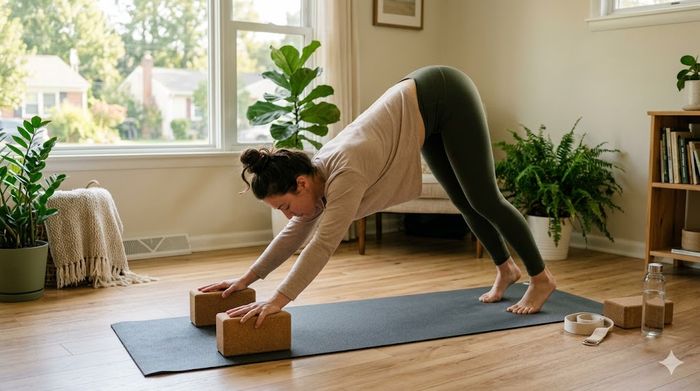
Often considered the quintessential yoga pose, Downward Facing Dog is a powerhouse for flexibility. For a beginner, it might feel more like a workout for the arms. However, as you learn to shift your weight back toward your heels, you’ll feel an incredible stretch along the entire back of your body. Pro tip: Keep your knees slightly bent if your hamstrings feel tight. The goal is a long, straight spine, not flat feet on the floor.
How to Stretch Safely: The "Golden Rules"
Safety is the most important aspect of starting yoga. Injuries happen when ego takes over. Here are the cardinal rules for safe stretching:
- Listen to the Edge: There is a difference between "good pain" (a deep stretch) and "bad pain" (sharp, stabbing, or pinching). If you feel bad pain, back off immediately.
- Never Bounce: Ballistic stretching (bouncing) can cause micro-tears in the muscles. In yoga, we move with control.
- Breathe Continuously: If you are holding your breath, your muscles are tensing up. Deep exhales help the muscles relax into the stretch.
- Use Props: Yoga blocks, straps, and even a folded blanket are not "cheating." They are tools to bring the floor closer to you, ensuring proper alignment.
The Importance of Warm-ups
Never jump into deep stretches "cold." Even five minutes of light movement, like walking in place or doing gentle neck and shoulder rolls, increases blood flow to the muscles. This makes the tissues more pliable and significantly reduces the risk of injury. In many American yoga studios, sessions start with "Sun Salutations," which are a perfect way to warm up the entire body.
Common Mistakes to Avoid as a Yoga Beginner
Many beginners fall into the same traps. By recognizing these early, you can progress faster and stay safe:
1. Comparing Yourself to Others
Social media is filled with photos of advanced yogis in incredible poses. Remember that their journey is years long. Your yoga practice is a personal experience. Comparing your "Day 1" to someone else’s "Year 10" is a recipe for frustration and injury.
2. Overstretching the Hamstrings
Hamstring injuries are common because people try to force their legs straight. This can pull on the attachment points at the sit bones. Always keep a "micro-bend" in your knees during forward folds to protect your joints.
3. Ignoring the Core
Flexibility requires stability. Without a strong core, you might put too much pressure on your lower back during stretches. Engage your abdominal muscles gently in every pose to support your spine.
Creating a Sustainable Home Practice in the USA
You don't need an expensive gym membership to get flexible. Many Americans prefer the privacy and convenience of home practice. Here is how to set yourself up for success:
- Find a Quiet Space: You only need enough room for your mat. A clutter-free environment helps clear the mind.
- Invest in a Quality Mat: A non-slip mat is crucial for safety, especially in poses like Downward Dog where your hands might slide.
- Set Realistic Goals: 15 minutes of yoga every day is better than a 90-minute session once a week. Consistency is the secret to flexibility.
- Follow a Guide: Use reputable apps or YouTube channels designed for beginners to ensure you are learning the correct form.
When is the Best Time to Practice?
While many prefer morning yoga to wake up the body, your muscles are actually naturally more flexible in the late afternoon or evening when your body temperature is higher. Experiment to see what fits your schedule and how your body responds at different times of the day.
The Mental Benefits: More Than Just Stretching
While your goal might be to touch your toes, you will soon find that yoga offers much more. The focus on breath and mindfulness reduces cortisol (the stress hormone). In our fast-paced American culture, having a dedicated time to disconnect from technology and reconnect with your body is invaluable. This mental clarity often leads to better sleep, improved focus, and a more positive outlook on life.

Final Verdict: Embracing Your Journey
Yoga for flexibility is a marathon, not a sprint. By focusing on safe stretching techniques, listening to your body, and maintaining a consistent routine, you will see progress that transcends the mat. You’ll stand taller, move with less pain, and feel more grounded in your daily life. Don't wait until you are "flexible enough" to start—start today exactly as you are. Your future, more mobile self will thank you for the effort you put in now. Remember, the hardest part of yoga is often just unrolling the mat.
