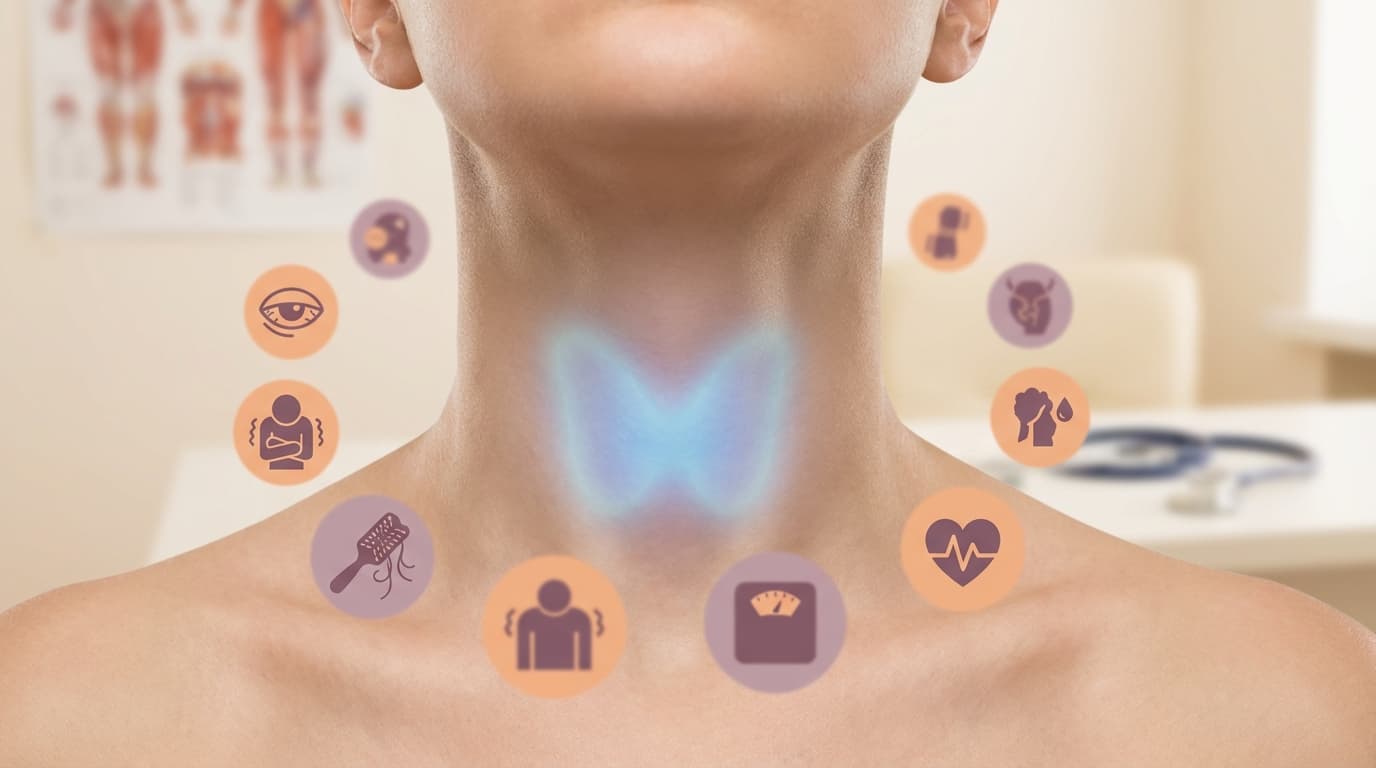
I have often referred to the thyroid gland as the "master controller" of our metabolism. This small, butterfly-shaped organ located at the base of your neck has a massive impact on almost every system in your body. When it functions correctly, you barely notice it. But when it malfunctions, it can unleash a cascade of confusing symptoms that many people dismiss as just "getting older" or "stress."
From my perspective, understanding these signals is crucial. Whether your thyroid is producing too much hormone (hyperthyroidism) or too little (hypothyroidism), your body will send you warning signs. Ignoring them can lead to serious long-term health complications.

Key Takeaways
- Thyroid issues affect weight, energy, and mood significantly.
- Symptoms are often mistaken for stress or aging.
- Early detection through blood tests is vital for management.
- Diet and lifestyle play a supportive role in treatment.
Last updated:
Estimated Reading Time: 9 minutes
Table of Contents
Who is this guide for? This article is designed for individuals who feel "off" but can't pinpoint why, particularly women over 30 and those with a family history of endocrine disorders.
1. Extreme Fatigue and Exhaustion
Feeling tired is one thing; feeling completely drained despite sleeping 8 hours a night is another. Fatigue is largely considered the number one symptom of hypothyroidism. When your thyroid hormone levels are low, your body doesn't receive the "go" signal to create energy. You may feel like you are moving through molasses.
Conversely, with hyperthyroidism, you might feel "wired but tired." Your body is in overdrive, preventing restful sleep, which leads to a crash. If you are constantly battling low energy, it might be beneficial to look into strategies for seasonal detoxification and energy boosting to see if lifestyle changes help, but persistent fatigue usually requires a blood test.
2. Unexplained Weight Changes
Have you been dieting and exercising but the scale won't budge? Or perhaps you are eating everything in sight but losing weight? Unexplained weight changes are a classic sign of thyroid dysfunction.
- Hypothyroidism: Leads to weight gain due to a slow metabolism.
- Hyperthyroidism: Causes sudden weight loss despite an increased appetite.
I have discussed my own struggles with weight in my article about how I lost 20 kg, highlighting that sometimes metabolic factors are at play. If you are looking for nutritional approaches, exploring effective diets can help, but only after your thyroid levels are normalized.
3. Anxiety and Depression
The link between your mood and your thyroid is profound. Too little thyroid hormone affects the levels of "feel-good" serotonin in the brain, leading to depression or unusual sadness. According to the Mayo Clinic, mental health symptoms are often early indicators of thyroid disease.
On the other end of the spectrum, hyperthyroidism can cause panic attacks and severe anxiety. It is essential to treat the root cause rather than just the symptoms.
4. Sensitivity to Cold or Heat
Your thyroid acts as your body's thermostat. If you are constantly freezing while everyone else is comfortable, you might have hypothyroidism. If you are sweating profusely and cannot tolerate heat, it could be hyperthyroidism.
5. Digestive Issues
Hypothyroidism slows down the digestive tract, often leading to severe constipation. Hyperthyroidism accelerates it, causing diarrhea or frequent bowel movements. Your gut health is deeply connected to your hormones. To support your liver, which plays a role in converting thyroid hormones, consider integrating liver-supporting teas into your routine. Furthermore, understanding the impact of excessive meat consumption on digestion is also valuable for overall gut balance.
6. Heart Rate Irregularities
Thyroid hormones directly affect your heart rate. You might experience palpitations—a feeling that your heart is fluttering or skipping a beat.
Hyperthyroidism causes a rapid heartbeat (tachycardia), which can trigger atrial fibrillation. Research from the American Thyroid Association confirms that untreated hyperthyroidism significantly increases the risk of cardiac events. For a deeper understanding, I recommend reading about signs of heart rhythm problems. Additionally, since thyroid issues can influence blood pressure, reviewing methods to manage blood pressure is a proactive step.
7. Hair and Skin Changes
Hair loss is a distressing symptom for many. Low thyroid function can cause hair to become dry, brittle, and break easily. Your skin might also become coarse and scaly. While hydration helps, addressing the hormonal imbalance is key. Natural remedies can offer some topical relief; for instance, the benefits of coconut oil are well-documented for moisturizing dry skin associated with these conditions.
8. Neck Swelling (Goiter)
A visible swelling at the base of your neck is a clear physical sign that something is wrong with the thyroid. This is called a goiter. It can occur with both hyperthyroidism and hypothyroidism. It may also indicate thyroid nodules or, in rare cases, cancer.
9. Cholesterol Issues
If your cholesterol levels are high despite a healthy diet and exercise, your thyroid might be to blame. Hypothyroidism reduces the liver's ability to process blood, leading to high LDL. This is a silent risk factor for strokes. Understanding foods and habits that protect against stroke is essential if you are managing thyroid-induced cholesterol spikes.
10. The Role of Diet
While medication is often necessary, diet plays a huge role in management. Iodine, selenium, and zinc are critical. However, for those with hyperthyroidism, restricting certain foods is crucial. I strongly suggest reading my guide on nutrition for hyperthyroidism to avoid exacerbating symptoms.
Comparison: Hypo vs. Hyper
| Symptom | Hypothyroidism (Underactive) | Hyperthyroidism (Overactive) |
|---|---|---|
| Weight | Gain | Loss |
| Temperature | Cold Intolerance | Heat Intolerance |
| Energy | Fatigue, Sluggishness | Nervous Energy, Insomnia |
| Heart Rate | Slow | Rapid, Palpitations |
Myth vs. Reality
Myth: Thyroid problems only affect older women.
Reality: While more common in women, men and even children can suffer from thyroid dysfunction. WebMD highlights that symptoms often present differently in men.
Myth: Taking iodine supplements always helps.
Reality: For autoimmune thyroid conditions like Hashimoto's, excess iodine can actually worsen the condition. Harvard Health suggests monitoring iodine intake carefully.
👨⚕️ Specialist Advice
"Do not guess with your thyroid. Symptoms are vague and overlap with other conditions. The only way to know for sure is a full thyroid panel blood test measuring TSH, Free T3, Free T4, and Thyroid Antibodies."

Final Verdict
Thyroid disorders are master mimics. They disguise themselves as stress, fatigue, or aging. However, the combination of symptoms—like gaining weight while feeling cold and tired—usually points to the thyroid.
If you recognize more than three of the signs listed above, schedule an appointment with your healthcare provider immediately. Early intervention can restore your vitality and prevent long-term damage to your heart and metabolism.
Frequently Asked Questions
Can thyroid problems go away on their own?
Generally, no. While some temporary thyroiditis (like postpartum) may resolve, conditions like Hashimoto's or Graves' disease are chronic and require lifelong management.
What foods should I avoid with hypothyroidism?
It is often recommended to limit goitrogenic foods (like raw kale or broccoli) if you have an iodine deficiency, and many patients benefit from reducing gluten and processed sugars.
How do I check my thyroid at home?
You can perform a "neck check." Tilt your head back, swallow a sip of water, and watch your neck area below the Adam's apple for any bulges or protrusions. For accurate results, see the NHS guidelines on diagnosis.
Disclaimer: The information provided in this article is for educational purposes only and does not constitute medical advice. Always consult a healthcare professional for diagnosis and treatment.
References:
- Mayo Clinic. (n.d.). Hypothyroidism (underactive thyroid).
- American Thyroid Association. (n.d.). Hyperthyroidism.
- WebMD. (n.d.). Understanding Thyroid Problems -- the Basics.
- NHS. (n.d.). Diagnosis - Underactive thyroid (hypothyroidism).
- Harvard Health Publishing. (n.d.). Thyroid hormone: How it affects your heart.
