
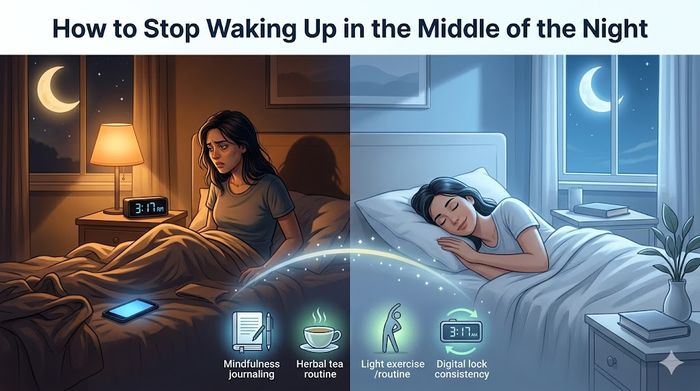
There is a specific kind of silence that only exists at 3:00 AM. It’s that heavy, isolating quiet that greets you when your eyes suddenly snap open, and the realization hits: you are awake again. You glance at the clock, feel a wave of frustration, and start calculating how many hours are left before the alarm goes off. If this sounds familiar, you are not alone. Millions of Americans struggle with "sleep maintenance insomnia," a frustrating cycle that leaves you feeling like a ghost of yourself the following day. But here is the good news: waking up in the middle of the night isn't a life sentence. It’s a signal from your body that something—be it your environment, your biology, or your habits—is slightly out of sync.
Understanding the Science of Why We Wake Up

To fix the problem, we first have to understand the architecture of sleep. Sleep isn't a flat line of unconsciousness; it’s a series of cycles, each lasting about 90 minutes. We move from light sleep into deep, restorative sleep, and finally into REM (Rapid Eye Movement) sleep. Between these cycles, it is actually perfectly natural to experience "micro-awakenings." Historically, our ancestors might have woken up briefly to check for predators or stoke a fire. The problem isn't the waking up itself; it's the inability to fall back asleep.
In the United States, modern stressors—from the blue light of our smartphones to the high-pressure work culture—have essentially "trained" our brains to stay on high alert. When you wake up during those light transitions between sleep cycles, a brain that is already primed by stress will immediately start scanning for "threats" (like that email you forgot to send), making it impossible to drift back into the next cycle.
Common Culprits of Midnight Awakenings
Identifying the "why" is the first step toward a solution. Often, the cause is hidden in plain sight. Let's look at the most common reasons why Americans are losing sleep in the middle of the night.
1. The Alcohol Trap
Many people use a glass of wine or a nightcap to help them fall asleep faster. While alcohol is a sedative that might knock you out initially, it wreaks havoc on your sleep quality. As your body metabolizes the alcohol, it creates a "rebound effect," shifting you from deep sleep to very light sleep or full wakefulness in the second half of the night.
2. Blood Sugar Fluctuations
If you eat a high-sugar snack or a heavy carb-loaded meal late in the evening, your blood sugar spikes and then crashes. When your blood sugar drops too low during the night (hypoglycemia), your body releases cortisol—the stress hormone—to signal the liver to release stored glucose. Unfortunately, cortisol also wakes you up.
3. The Temperature Factor
Your core body temperature needs to drop by about 2 to 3 degrees Fahrenheit to initiate and maintain deep sleep. If your bedroom is too warm, or if your blankets aren't breathable, your body will struggle to stay in those deep stages, leading to a restless awakening often accompanied by night sweats.
| Trigger | What Happens | Solution |
|---|---|---|
| Alcohol | Fragmented REM sleep | Stop drinking 3-4 hours before bed |
| Late Caffeine | Blocks adenosine (sleep drive) | No caffeine after 12:00 PM |
| Blue Light | Suppresses melatonin | No screens 60 mins before bed |
| Warm Room | High core temp wakes you up | Set thermostat to 65-68°F |
Mastering Your Sleep Hygiene
Stopping midnight awakenings starts long before you pull back the covers. It begins with your daily routine. This is what sleep experts call "sleep hygiene." Think of it as preparing a runway for a smooth landing.
The Power of Morning Sunlight
Your internal clock, or circadian rhythm, is anchored by light. By getting 15-30 minutes of natural sunlight first thing in the morning, you signal to your brain that the day has started. This sets a "timer" for melatonin production to begin about 14-16 hours later. If you spend all day in a dimly lit office, your brain never gets a clear signal of when it's time to be awake and when it's time to be asleep.
Consistent Sleep Schedules
Our bodies thrive on predictability. If you go to bed at 10 PM on weekdays but stay up until 2 AM on weekends, you are essentially giving yourself "social jetlag." Your body won't know when to release the hormones necessary for deep sleep, making you more prone to waking up in the middle of the night. Try to keep your wake-up time consistent within 30 minutes, even on Saturdays and Sundays.
The "Buffer Zone": Creating a Pre-Sleep Ritual
In the United States, we tend to go at 100 MPH until the second we hit the pillow. We expect our brains to simply "turn off." It doesn't work that way. You need a "buffer zone" of at least 60 minutes before bed to downshift your nervous system.
- Dim the lights: Lowering the ambient light in your home mimics the sunset and encourages melatonin flow.
- A "Brain Dump": If you wake up worrying about tomorrow’s tasks, spend 5 minutes writing down everything on your mind before bed. Putting it on paper tells your brain, "It's handled," so it doesn't have to remind you at 3 AM.
- Warm Bath or Shower: Interestingly, a warm bath helps you sleep not by heating you up, but by bringing blood to the surface of your skin, which then allows your core temperature to drop rapidly when you step out.
What to Do (And NOT Do) When You Wake Up
This is the most critical part of the process. How you handle the first 10 minutes of being awake determines whether you will be back to sleep in 15 minutes or staring at the ceiling for two hours.
The Golden Rule: Don't Check the Clock
Checking the time is a "sleep killer." The moment you see "3:14 AM," your mathematical brain kicks in. You start calculating: "If I fall asleep now, I’ll get 3 hours and 46 minutes of sleep." This triggers anxiety, which releases adrenaline, which makes sleep impossible. Turn your clock away from the bed.
The 20-Minute Rule
If you have been lying in bed for what feels like 20 minutes and you are starting to feel frustrated, get out of bed. You don't want your brain to associate the bed with the stress of being awake. Go to another room, keep the lights very low, and do something boring. Read a physical book (no screens!), listen to soft music, or fold some laundry. Go back to bed only when you feel that wave of sleepiness returning.
Advanced Techniques for Restless Minds
Sometimes, the body is tired, but the mind is racing. In these cases, we need to manually override our "fight or flight" response using biological hacks.
4-7-8 Breathing
Developed by Dr. Andrew Weil, this technique is like a natural tranquilizer for the nervous system. Inhale through your nose for 4 seconds, hold your breath for 7 seconds, and exhale forcefully through your mouth for 8 seconds. This pattern forces your heart rate to slow down and shifts you into the "rest and digest" parasympathetic state.
Cognitive Shuffling
Your brain wakes you up because it is trying to solve problems. Cognitive shuffling disrupts this. Pick a word, like "BEDTIME." Imagine an item starting with B (Ball), then another (Bear), then another (Boat), until you run out of B words. Move to E (Elephant, Egg, Eagle). This random visualization prevents your brain from engaging in linear, stressful thoughts and mimics the fragmented imagery of the onset of sleep.
When to Seek Professional Help
While lifestyle changes fix the majority of sleep issues, sometimes waking up in the middle of the night is a symptom of an underlying medical condition. In the US, Sleep Apnea is significantly underdiagnosed. If you wake up gasping for air, or if your partner says you snore loudly and stop breathing, you should consult a sleep specialist.
Other conditions like Restless Leg Syndrome (RLS), Chronic Pain, or hormonal shifts during menopause can also be primary drivers of night waking. If you have tried all the hygiene tips for more than four weeks and still find yourself awake every night, it’s time to speak with a healthcare provider. There is no shame in seeking help for one of the most vital functions of your life.

Verdict: Reclaiming Your Nights
Stopping the cycle of waking up in the middle of the night is not about one single "magic pill." It is a holistic approach that respects your body’s need for darkness, coolness, and calmness. By managing your blood sugar, limiting alcohol, and training your brain to stay calm during those natural micro-awakenings, you can transform your sleep from a source of stress into a sanctuary of recovery.
Consistency is your greatest ally. Start tonight by turning your phone off an hour early and setting your thermostat to 67 degrees. Be patient with yourself—your body needs time to unlearn old habits. Within a few weeks, those 3:00 AM ceiling-staring sessions will become a distant memory, replaced by the deep, uninterrupted rest you deserve.