In today’s fast-paced world, anxiety has become an almost universal experience. For many Americans, the constant buzz of notifications, the pressure of career milestones, and the challenge of balancing personal life can lead to a state of chronic stress. However, achieving mental wellness doesn’t always require a complete lifestyle overhaul. Often, the most significant changes come from the smallest, most consistent actions we take every day. By integrating simple, evidence-based habits into your routine, you can effectively lower your cortisol levels and reclaim your sense of inner peace.

1. Master the Art of the Mindful Morning
How you start your day sets the tone for everything that follows. Most of us reach for our smartphones within seconds of waking up, immediately flooding our brains with emails, news alerts, and social media comparisons. This habit triggers an immediate spike in dopamine and cortisol, putting your nervous system on high alert before you’ve even stepped out of bed.
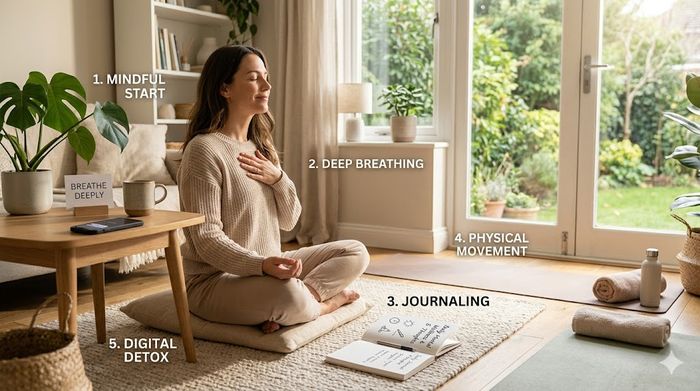
Instead, try a "no-phone first hour." Use this time for a simple breathing exercise or a five-minute meditation. Focusing on your breath helps activate the parasympathetic nervous system—the body's "rest and digest" mode—which counteracts the "fight or flight" response associated with anxiety. Even just sitting in silence with a cup of tea can ground your thoughts and provide a buffer against the day's upcoming stressors.
The 4-7-8 Breathing Technique
One of the most effective ways to reduce immediate anxiety is the 4-7-8 technique. Inhale quietly through your nose for 4 seconds, hold your breath for 7 seconds, and exhale forcefully through your mouth for 8 seconds. This rhythmic pattern acts as a natural tranquilizer for the nervous system.
2. Implement a Daily "Brain Dump" Journaling Session
Anxiety often stems from a "cluttered" mind—a loop of "what-ifs" and half-finished to-do lists. When these thoughts stay trapped in your head, they feel overwhelming and insurmountable. Journaling provides a physical outlet for this mental energy.
A "brain dump" involves writing down everything that is currently worrying you, no matter how small or irrational it might seem. By putting these thoughts on paper, you externalize them. This process allows your brain to stop working so hard to remember and "solve" these problems in the background. Research shows that expressive writing can significantly reduce intrusive thoughts and improve overall cognitive function.
- Spend 5 to 10 minutes each evening writing without self-censorship.
- Identify which worries are within your control and which are not.
- Focus on the "next smallest step" for the things you can control.
3. Prioritize Daily Non-Negotiable Movement
The link between physical health and mental wellness is profound. Exercise is not just about weight management; it is one of the most potent anti-anxiety treatments available. When you move your body, you release endorphins—the body's natural feel-good chemicals.
You don’t need to spend hours at the gym to see results. A brisk 20-minute walk, especially outdoors, can work wonders. Nature therapy, or "forest bathing," has been shown to lower heart rates and blood pressure. The combination of fresh air, sunlight (which boosts Vitamin D), and rhythmic movement helps regulate your mood and provides a healthy distraction from anxious ruminations.
| Type of Movement | Benefits for Anxiety | Recommended Time |
|---|---|---|
| Walking in Nature | Lowers cortisol, boosts Vitamin D | 20-30 mins |
| Yoga/Stretching | Releases physical tension, mindful focus | 15-20 mins |
| High-Intensity (HIIT) | Maximum endorphin release | 10-15 mins |
4. Establish Digital Boundaries and Detox Windows
In the digital age, our brains are constantly bombarded with information. This "infoxication" keeps us in a state of hyper-vigilance, which is a breeding ground for anxiety. To protect your mental wellness, it is crucial to set firm boundaries with your devices.
Try implementing "tech-free zones" or specific times of the day when you step away from all screens. For instance, making the dinner table a phone-free zone or turning off notifications after 8 PM can significantly improve your quality of life. This practice allows your mind to decompress and prepares you for a better night's sleep—another critical component of anxiety reduction.
Practical Digital Detox Tips:
- Turn off non-essential push notifications.
- Avoid "doomscrolling" the news before bed.
- Use app timers to limit social media usage.
- Leave your phone in another room while working or sleeping.
5. Practice Active Gratitude to Rewire Your Brain
Anxiety is often focused on the future—anticipating threats that haven't happened yet. Gratitude, on the other hand, pulls you back into the present moment and focuses your attention on what is going well. This isn't about ignoring your problems; it's about balancing your perspective.
Neuroscience shows that practicing gratitude can literally rewire your brain. It strengthens the neural pathways associated with positive emotions and weakens those associated with fear and anxiety. Every day, identify three specific things you are grateful for. Instead of vague statements like "my family," try to be specific: "the way the sun hit the kitchen table this morning" or "the kind word from my colleague."
The Science of Consistency: Why Daily Habits Work
The reason these habits are so powerful is due to neuroplasticity—the brain's ability to change and adapt. When you perform these actions consistently, they become your brain's new "default" setting. Initially, it might take conscious effort to remember to breathe or journal, but over time, your nervous system will learn to stay calmer even during stressful situations.
Remember, the goal isn't to eliminate anxiety entirely—anxiety is a natural human emotion designed to keep us safe. The goal is to build a toolkit of habits that prevent anxiety from controlling your life. By treating your mental wellness with the same importance as your physical hygiene, you create a foundation for long-term resilience and happiness.
A Sample Daily Wellness Schedule
Integrating all five habits might seem daunting, but when broken down, they take less than an hour of your total day. Here is how you could structure it:
- 7:00 AM: Wake up, 5 minutes of 4-7-8 breathing (No phone).
- 12:30 PM: 15-minute brisk walk during lunch break.
- 6:30 PM: Tech-free dinner with family or friends.
- 9:00 PM: Brain dump journaling (10 minutes).
- 9:15 PM: Note 3 specific gratitudes before turning out the lights.
If you are struggling with severe anxiety, please remember that these habits are meant to complement, not replace, professional medical advice. Always consult with a healthcare provider or a licensed therapist to find the best path forward for your specific needs. You are not alone on this journey, and help is always available.

Final Verdict: Reclaiming Your Calm
Reducing anxiety isn't about one-time grand gestures; it's about the cumulative power of small, daily habits. By committing to mindful mornings, consistent journaling, regular movement, digital boundaries, and gratitude, you are actively participating in your own mental wellness. These practices don't just reduce stress—they enhance your overall quality of life, allowing you to show up as your best self for your family, your work, and, most importantly, yourself. Start today with just one of these habits and watch how it transforms your perspective.
Your mental health is an investment, not a luxury. Treat it with the care it deserves.
