Omega-3 Rich Clean Eating Lunches
You have probably noticed that the meal you consume in the middle of the day directly dictates how you feel for the remainder of the afternoon. When you opt for a heavy, processed lunch, you inevitably face that dreaded mid-afternoon energy slump, usually accompanied by brain fog and an overwhelming urge to nap. On the flip side, choosing omega-3 rich clean eating lunches can completely transform your daily routine, providing sustained energy, improved focus, and profound long-term health benefits.
Clean eating is not a restrictive diet or a temporary fad; it is a sustainable lifestyle choice that focuses on consuming whole, unprocessed foods in their most natural state. When you combine this foundational philosophy with ingredients that are naturally high in omega-3 fatty acids, you create powerful, nutrient-dense meals that fuel your body and mind. If you want to understand more about the core rules of whole foods, exploring foundational clean eating principles can provide a solid starting point for your journey.
Why Omega-3 Fatty Acids Are Essential for Your Body
Omega-3 fatty acids are incredible nutrients that your body cannot produce on its own, meaning you must obtain them through your diet. They are broadly categorized into three main types: EPA (eicosapentaenoic acid), DHA (docosahexaenoic acid), and ALA (alpha-linolenic acid). EPA and DHA are primarily found in marine sources like fish and algae, while ALA is abundant in plant sources such as seeds and nuts.
The benefits of integrating these healthy fats into your midday meals are extraordinary. First, omega-3s are renowned for their anti-inflammatory properties. Chronic inflammation is the root cause of many modern diseases, including heart disease, arthritis, and metabolic syndrome. By eating lunches packed with these fats, you actively help your body soothe inflammation at a cellular level.
Furthermore, your brain is composed of nearly 60% fat, and a significant portion of that is DHA. Feeding your brain with the right building blocks enhances cognitive function, sharpens memory, and even helps stabilize your mood. This makes omega-3 rich clean eating lunches the ultimate brain food for a highly productive workday. While whole foods are best, some people also benefit from high-quality omega-3 supplements to bridge any nutritional gaps.
Top 5 Omega-3 Superfoods to Keep in Your Kitchen
Creating clean, nutrient-dense lunches is much easier when your pantry and fridge are stocked with the right ingredients. Here are the top five omega-3 powerhouses you should always have on hand:
- Wild-Caught Salmon: Arguably the most famous source of EPA and DHA. Always opt for wild-caught over farmed salmon when possible, as it typically has a better fatty acid profile and fewer contaminants.
- Chia Seeds: These tiny seeds are absolute nutritional giants. They are loaded with ALA omega-3s, fiber, and protein. They also absorb water, helping to keep you hydrated and full throughout the afternoon.
- Walnuts: It is no coincidence that walnuts look like little human brains. They are the top nut for brain health, offering a massive dose of plant-based omega-3s alongside a satisfying crunch.
- Sardines: Often overlooked, sardines are one of the cleanest fish you can eat. Because they are at the bottom of the food chain, they contain virtually no mercury, yet they are overflowing with omega-3s, calcium, and vitamin D.
- Flaxseeds: To get the most out of flaxseeds, ensure they are ground before eating. They offer excellent levels of ALA and lignans, which support hormonal balance and digestive health.
Recipe 1: Wild-Caught Salmon and Quinoa Power Bowl
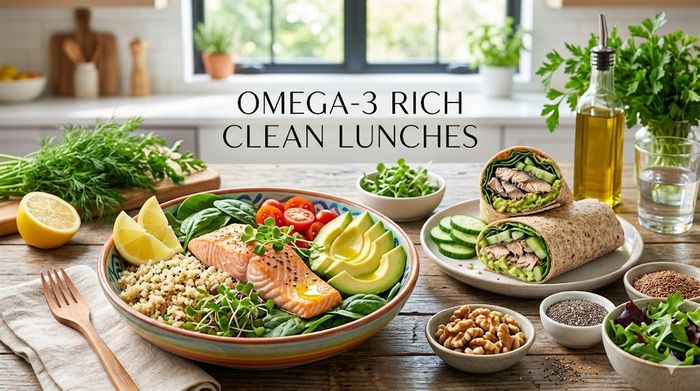
This recipe is the gold standard for omega-3 rich clean eating lunches. It combines the lean, high-quality protein and fats of salmon with the complex carbohydrates of quinoa, ensuring your blood sugar remains perfectly stable all afternoon.
Ingredients You Will Need
| Ingredient | Quantity | Preparation Notes |
|---|---|---|
| Wild-caught salmon filet | 5 oz (approx. 140g) | Skinless or skin-on, baked |
| Cooked quinoa | 1/2 cup | Rinsed before cooking |
| Fresh spinach | 2 cups | Washed and dried |
| Avocado | 1/4 piece | Sliced |
| Extra virgin olive oil | 1 tablespoon | Cold-pressed is best |
Preparation Instructions
- Preheat your oven to 375°F (190°C). Season your salmon lightly with salt, pepper, and a squeeze of fresh lemon juice.
- Bake the salmon on a parchment-lined tray for 12-15 minutes until it flakes easily with a fork.
- In a large bowl, lay down a bed of fresh spinach. Add the cooked quinoa over the greens.
- Place the baked salmon on top, add the avocado slices, and drizzle with extra virgin olive oil and a bit more lemon juice.
Recipe 2: Vegan Chia and Walnut Spinach Salad
For those who prefer a completely plant-based option, this vegan salad delivers an impressive amount of ALA omega-3s. It is incredibly refreshing, highly nutritious, and requires zero cooking, making it perfect for quick office lunches. If you want more plant-based meal inspiration, you can always check out other wholesome lunch recipes designed for a clean eating lifestyle.
To create this salad, gather 3 cups of mixed baby greens (spinach, kale, and arugula work best). Toss in a half cup of cherry tomatoes, a quarter cup of thinly sliced red onions, and a handful of chopped walnuts. The magic happens in the dressing: whisk together 2 tablespoons of olive oil, 1 tablespoon of apple cider vinegar, a teaspoon of Dijon mustard, and 1 full tablespoon of raw chia seeds. Let the dressing sit for about five minutes so the chia seeds can expand slightly, then pour it over your greens. The walnuts and chia seeds together provide a powerful omega-3 punch that will keep your brain alert all day.
Recipe 3: Mediterranean Sardine and Avocado Wrap
Sardines are the unsung heroes of clean eating. They are inexpensive, sustainable, and packed tightly with DHA and EPA. If you have been hesitant to try sardines, pairing them with the creamy texture of avocado and the acidity of lemon completely transforms their flavor profile.
Start with a whole-grain or gluten-free wrap. In a small bowl, mash half an avocado until it reaches a spreadable consistency. Open a tin of sardines (preferably packed in water or olive oil) and lightly flake the fish with a fork, mixing it directly into the mashed avocado. Add a squeeze of fresh lemon juice, some cracked black pepper, and a pinch of sea salt. Spread this mixture evenly over your wrap, top it with crisp cucumber slices and a handful of microgreens, then roll it up tightly. It is a highly portable, intensely nutritious lunch that requires barely five minutes to assemble.
Meal Prep Tips for a Clean Eating Lifestyle
A major hurdle people face when adopting a clean eating lifestyle is the time commitment required during busy weekdays. The secret to consistent success is strategic meal preparation. You do not need to spend your entire Sunday in the kitchen, but dedicating just one hour can set you up for a week of flawless lunches.
First, cook your grains in batches. Preparing a large pot of quinoa, brown rice, or buckwheat on Sunday means you have a healthy carbohydrate base ready to go for the next three to four days. Store these grains in airtight glass containers to maintain freshness and prevent any chemical leaching that often occurs with plastic containers.
Second, wash and thoroughly dry your leafy greens right when you get home from the grocery store. Wrap them in a clean paper towel before placing them in a container; this absorbs excess moisture and keeps spinach and arugula crisp all week. Finally, portion out your nuts and seeds. Having small jars pre-filled with chia seeds, flaxseeds, and walnuts makes it incredibly easy to sprinkle healthy fats over any meal in seconds.
Frequently Asked Questions
Can I use canned salmon instead of fresh?
Absolutely. Canned salmon is a fantastic, budget-friendly alternative that still retains very high levels of omega-3 fatty acids. Just ensure you read the label and select brands that use wild-caught salmon packed in water or high-quality olive oil, avoiding those packed in refined vegetable oils.
How much omega-3 do I actually need per day?
While individual needs vary based on age and health status, most general health organizations recommend a minimum of 250 to 500 milligrams of combined EPA and DHA daily for healthy adults. Consuming a serving of fatty fish twice a week, along with daily plant sources like chia or flax, usually covers this requirement comfortably.
What if I am strictly vegan and cannot eat fish?
If you follow a vegan diet, your primary sources of omega-3 will be ALA from walnuts, chia seeds, hemp seeds, and flaxseeds. Because the body's conversion rate of ALA to the more active forms (EPA and DHA) is quite low, vegans should consider incorporating an algae oil supplement, which directly provides plant-based DHA and EPA.
Final Thoughts on Your Clean Eating Journey
Transitioning to omega-3 rich clean eating lunches is one of the most rewarding decisions you can make for your physical and mental well-being. By stepping away from highly processed fast food and embracing the nourishing power of whole ingredients, you are actively investing in your longevity. The recipes and tips provided here are simply a foundation. Do not be afraid to experiment in the kitchen, swap ingredients based on what is in season, and discover flavor combinations that genuinely make you excited for your midday meal.
Remember, the goal is progress, not absolute perfection. Even replacing one heavy, processed lunch a week with a clean, omega-packed alternative will yield noticeable benefits in your energy levels and focus. Start small, prepare your ingredients in advance, and enjoy the delicious journey toward optimal health.
© Copyright SorinBlogger
