
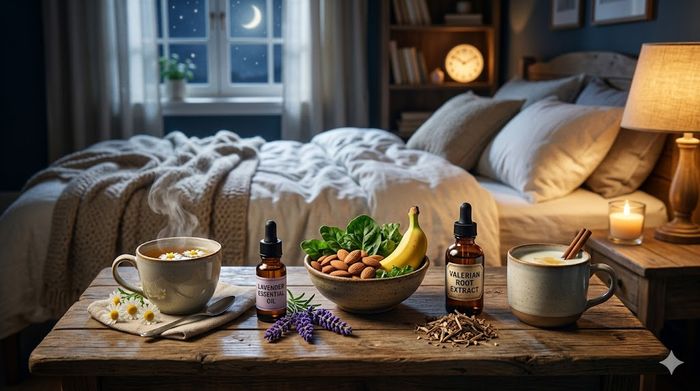
We have all been there—staring at the ceiling at 3:00 AM, calculating exactly how many hours of sleep we will get if we fall asleep "right now." In the fast-paced environment of modern America, sleep has become a luxury rather than a biological necessity. Whether it is the stress of a demanding career, the blue light from our ever-present screens, or the lingering effects of that late-afternoon espresso, millions of Americans struggle to find rest. However, before you reach for synthetic pills that might leave you feeling groggy the next morning, there is a better way. Nature offers a pharmacy of solutions that work in harmony with your body’s internal clock.
1. Magnesium: The Master Relaxant for Deep Sleep

Magnesium is often called the "relaxation mineral," and for good reason. It is involved in over 300 biochemical reactions in the human body, and a significant portion of the US population is actually deficient in it. When it comes to sleep, magnesium plays a crucial role by regulating neurotransmitters that send signals throughout the nervous system and brain. Most importantly, it helps activate the parasympathetic nervous system, the system responsible for getting you calm and relaxed.
Research suggests that magnesium can improve sleep quality, especially in people with poor sleep habits. It achieves this by binding to gamma-aminobutyric acid (GABA) receptors. GABA is the neurotransmitter responsible for quieting down nerve activity. By mimicking the effect of GABA, magnesium helps your brain "switch off" at night. If you find your mind racing with tomorrow's to-do list, magnesium might be the missing piece of your puzzle.
The Best Forms of Magnesium for Sleep
- Magnesium Glycinate: Highly absorbable and the least likely to cause a laxative effect. It is the gold standard for relaxation.
- Magnesium Citrate: Good for general health but can be harder on the stomach in high doses.
- Epsom Salts: Adding magnesium sulfate to a warm bath allows for transdermal absorption while the warm water lowers your core temperature, signaling sleep.
2. Valerian Root: Nature's Gentle Sedative
If you are looking for something with a bit more "punch" than a standard cup of tea, valerian root has been used since the days of ancient Greece and Rome to treat insomnia. Today, it remains one of the most popular herbal sleep aids in the United States. Unlike pharmaceutical sleep aids, valerian is generally considered non-habit forming and does not cause the "hangover" effect often associated with over-the-counter medications.
The root contains several compounds, including valerenic acid and various iridoids, which interact with GABA receptors in the brain. Many users find that while it may not knock them out instantly like a heavy sedative, it significantly reduces the time it takes to fall asleep and improves the overall structure of sleep stages, including deep, restorative REM sleep.
How to Use Valerian Effectively
Valerian root is available in capsules, tinctures, and teas. Because of its strong, earthy odor (often compared to old socks), many people prefer capsules. For best results, take it about 30 to 60 minutes before bedtime. Interestingly, some studies suggest that valerian works best when taken consistently for two or more weeks, as the effects can build up over time.
| Remedy | Main Benefit | Time to Effect |
|---|---|---|
| Magnesium | Muscle relaxation & Anxiety reduction | 30-60 Minutes |
| Valerian Root | Sedative properties, faster sleep onset | 30-90 Minutes |
| Chamomile | Gentle calming, stress relief | 20-40 Minutes |
| Melatonin | Circadian rhythm regulation | 30-60 Minutes |
3. Chamomile Tea: The Bedtime Ritual
While it might seem like a simple "old wives' tale," chamomile tea is backed by significant scientific interest. The calming effects of chamomile are attributed to an antioxidant called apigenin. Apigenin binds to specific receptors in your brain that may promote sleepiness and reduce insomnia.
In a study of postpartum women, those who drank chamomile tea for two weeks reported better sleep quality compared to those who did not. Beyond the chemical properties, the act of drinking tea itself serves as a powerful psychological signal to your body. By creating a consistent nightly ritual—brewing the tea, smelling the aroma, and feeling the warmth—you are training your brain to recognize that it is time to wind down. This is a cornerstone of good sleep hygiene.
4. Melatonin: The Circadian Rhythm Reset
Melatonin is a hormone that your body produces naturally in response to darkness. It tells your brain that it is night time and that you should sleep. However, in our modern world, we are constantly exposed to artificial light from smartphones and LED bulbs. This "light pollution" tricks the brain into thinking it is still daytime, suppressing the natural surge of melatonin we need to drift off.
Supplementing with melatonin is particularly effective for people dealing with jet lag, shift work, or Delayed Sleep Phase Disorder. However, many Americans make the mistake of taking too much. While you can find 5mg or 10mg doses in any pharmacy, experts often suggest starting with as little as 0.3mg to 1mg. The goal is to nudge your rhythm, not to overpower your biology.
Tips for Using Melatonin Safely
To maximize effectiveness, take melatonin 30 to 60 minutes before your desired bedtime. Once you take it, dim the lights and put away the phone. If you continue to scroll through social media after taking melatonin, you are essentially giving your brain conflicting signals: a pill that says "sleep" and a screen that says "wake up."
5. Lavender Aromatherapy: Scent-Driven Serenity
The power of the olfactory system is often underrated. Lavender is perhaps the most well-studied scent for relaxation. Inhaling lavender essential oil has been shown to lower heart rate, temperature, and blood pressure—all processes that the body naturally undergoes as it prepares for sleep.
For those who prefer not to ingest supplements, lavender is an excellent non-invasive option. You can use a diffuser in your bedroom, apply a diluted essential oil to your wrists, or even use a lavender-scented pillow spray. Several clinical trials have demonstrated that lavender can increase the percentage of deep slow-wave sleep in both men and women, leading to a more refreshed feeling upon waking.
The 4-7-8 Breathing Technique
To truly supercharge your natural remedies, combine them with the 4-7-8 breathing technique. This is a rhythmic breathing pattern that acts as a natural tranquilizer for the nervous system:
- Inhale through your nose for 4 seconds.
- Hold your breath for 7 seconds.
- Exhale forcefully through your mouth for 8 seconds, making a "whoosh" sound.
This practice increases oxygen in the bloodstream and forces you to focus on your breath, effectively silencing the internal chatter that often keeps us awake.
The Role of Environment and Habits
No amount of valerian root or magnesium can fix a sleep environment that is actively working against you. To ensure these natural remedies work effectively tonight, consider the "Three C's": Cool, Calm, and Completely Dark. Your bedroom should ideally be between 60 and 67 degrees Fahrenheit. Use blackout curtains to eliminate streetlights, and consider a white noise machine if you live in a busy city like New York or Los Angeles.
Furthermore, watch your intake of stimulants. Caffeine has a half-life of about five to six hours. If you drink a cup of coffee at 4:00 PM, half of that caffeine is still in your system at 10:00 PM. Alcohol is another common culprit; while it might help you fall asleep faster, it destroys the quality of your sleep by disrupting REM cycles and causing middle-of-the-night awakenings.

Final Verdict: Reclaiming Your Night
Achieving better sleep tonight does not require a miracle; it requires a combination of nature’s wisdom and a commitment to better habits. Whether you choose the calming power of magnesium, the traditional support of valerian root, or the soothing ritual of chamomile tea, these remedies offer a path to rest without the side effects of synthetic drugs. Start small—pick one or two remedies to try tonight, dim your lights, and give your body the rest it deserves. Sleep is the foundation of your health, your mood, and your productivity. It is time to treat it with the respect it deserves.
