
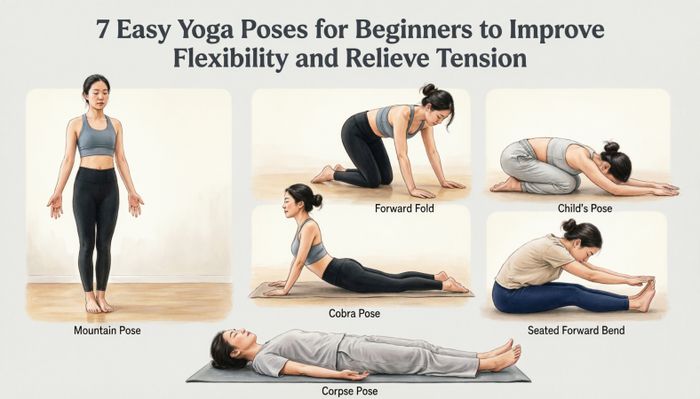
Modern life in the United States often feels like a never-ending marathon. Between long commutes, hours hunched over computer desks, and the general stress of managing daily responsibilities, our bodies accumulate an immense amount of physical and mental tension. This constant state of stress can lead to stiff muscles, poor posture, and a feeling of general fatigue that caffeine simply cannot fix. If you find yourself waking up with a stiff neck or a tight lower back, you are certainly not alone. Fortunately, you do not need to be a seasoned gymnast or possess extraordinary athletic abilities to find lasting relief. The ancient practice of yoga offers a highly accessible, incredibly effective pathway to better health, and starting with a few simple poses can fundamentally transform how your body feels and functions.

Many people mistakenly believe that yoga is exclusively for those who are already naturally limber. This is a common misconception that often prevents beginners from even stepping onto a mat. In reality, yoga is completely adaptable to your current physical condition. It is not about twisting yourself into complex shapes; rather, it is about connecting your breath with deliberate, gentle movements to release stored tension and gradually improve your overall flexibility. When you commit to a beginner-friendly routine, you are sending a signal to your nervous system that it is safe to relax. Over time, these basic stretches will loosen tight muscles, increase the mobility of your joints, and provide a profound sense of mental clarity. In this comprehensive guide, I will walk you through seven highly effective, beginner-friendly yoga poses specifically designed to help you unwind, stretch out tight areas, and reclaim a sense of physical freedom.
The Connection Between Flexibility and Tension Relief
Before diving directly into the poses, it is important to understand exactly how flexibility and tension are deeply interconnected within the human body. When you experience stress, your body’s natural "fight or flight" response is activated. This evolutionary mechanism causes your muscles to contract and brace for impact. While this is helpful if you are facing immediate physical danger, it is highly detrimental when the stress comes from an overflowing email inbox or heavy traffic on the interstate. Chronic stress leaves your muscles in a perpetual state of semi-contraction, leading to what we commonly refer to as "knots" or tightness, particularly in the shoulders, neck, and hips.
Improving your flexibility through yoga actively counteracts this process. By deliberately lengthening muscle fibers through sustained stretching, you encourage blood flow to areas that have been restricted. This fresh, oxygen-rich blood carries away metabolic waste products that contribute to muscle soreness. Furthermore, stretching stimulates the parasympathetic nervous system—the "rest and digest" network. As you breathe deeply into a stretch, your heart rate slows down, your blood pressure drops, and the rigid tension gripping your body begins to melt away. This is why a simple ten-minute stretching session can leave you feeling as refreshed as a full hour of deep sleep.
How to Prepare for Your Beginner Yoga Practice
To get the most out of these easy yoga poses, setting up a proper environment is essential. You do not need an expensive home studio, but creating a dedicated, quiet space will significantly enhance your experience. Find a spot in your home where you will not be easily interrupted by pets, children, or loud appliances. Lay down a standard, non-slip yoga mat. If you do not have a mat, a thick carpet or a large towel on a soft surface can work temporarily, though a proper mat provides the necessary grip and joint cushioning.
Wear clothing that allows for a full range of motion. Tight jeans or restrictive belts will hinder your ability to stretch properly. Opt for breathable leggings, sweatpants, or loose shorts, paired with a comfortable t-shirt. Additionally, you might want to keep a couple of supportive props nearby. A firm pillow, a folded blanket, or specialized yoga blocks can be incredibly helpful for modifying poses to suit your current flexibility level. Remember, the goal is not to force your body into a shape that causes pain; the goal is to find a comfortable edge where you feel a stretch without any sharp discomfort. If you want to learn more about setting up your space, you can search online for beginner yoga tips.
1. Child’s Pose (Balasana)
Child’s Pose is the ultimate resting posture in yoga. It is widely revered for its ability to quickly calm the mind and gently stretch the lower back, hips, thighs, and ankles. This pose is completely safe for beginners and acts as a wonderful "reset button" if you ever feel overwhelmed during a practice. It safely decompresses the spine, which is incredibly beneficial if you spend long hours sitting in an office chair.
How to perform Child's Pose:
- Start on your hands and knees on your mat.
- Spread your knees widely apart, keeping your big toes touching behind you.
- Exhale deeply as you lower your hips back to rest gently on your heels.
- Walk your hands forward, extending your arms straight out in front of you, and let your forehead rest softly on the floor.
- Close your eyes and take 5 to 10 slow, deep breaths, feeling your lower back expand with every inhalation.
2. Cat-Cow Stretch (Marjaryasana-Bitilasana)
This dynamic duo of poses is actually a flowing sequence that moves the spine from a rounded position to an arched one. The Cat-Cow stretch is fantastic for warming up the body, improving posture, and massaging the muscles surrounding the spine and the abdominal organs. It is highly recommended for anyone suffering from stiffness in the mid-to-upper back, a common issue for those who stare at smartphones or computer monitors all day.
How to perform Cat-Cow:
- Begin in a tabletop position with your wrists directly beneath your shoulders and your knees directly beneath your hips.
- Cow Pose: As you inhale, let your belly drop heavily toward the floor. Lift your chest and tailbone toward the ceiling, looking slightly upward.
- Cat Pose: As you exhale, push the floor away with your hands, round your spine up toward the ceiling (like a frightened cat), and tuck your chin toward your chest.
- Continue flowing smoothly between these two shapes, matching the movement to your natural breathing rhythm for about 1 minute.
3. Downward-Facing Dog (Adho Mukha Svanasana)
Downward-Facing Dog is perhaps the most famous yoga pose globally, and for good reason. It is an incredibly comprehensive stretch that targets the entire back of the body, from the heels up through the calves, hamstrings, glutes, and back, all while strengthening the arms and shoulders. As an inversion (where your head is below your heart), it also encourages healthy blood flow to the brain, which can help relieve mild stress and headaches. Beginners often find this pose challenging at first, but bending the knees slightly makes it much more accessible.
How to perform Downward-Facing Dog:
- Start in a tabletop position on your hands and knees. Spread your fingers wide and press firmly into the mat.
- Tuck your toes under and, as you exhale, lift your knees off the floor.
- Push your hips high up and back, aiming to create an inverted "V" shape with your body.
- If your hamstrings are tight, keep a generous bend in your knees. Your heels do not need to touch the floor.
- Let your head hang loosely between your biceps to release neck tension. Hold for 5 deep breaths.
4. Cobra Pose (Bhujangasana)
Cobra Pose is a gentle, accessible backbend that works wonders for counteracting the forward-slouching posture we adopt while driving or typing. It actively strengthens the muscles of the lower and middle back while stretching the chest, shoulders, and abdomen. Opening the chest cavity in this manner encourages deeper, more expansive breathing, which is a key component of stress reduction.
How to perform Cobra Pose:
- Lie completely flat on your stomach with your legs extended straight behind you, tops of your feet resting on the mat.
- Place your hands flat on the floor directly beneath your shoulders, keeping your elbows tucked closely to the sides of your body.
- Press the tops of your feet and your pelvis firmly into the mat.
- Inhale deeply and slowly lift your head and chest off the floor, using the strength of your back muscles rather than pushing aggressively with your arms.
- Keep your gaze directed slightly downward to avoid crunching the back of your neck. Hold for 3 to 5 breaths, then slowly lower down on an exhale.
5. Bridge Pose (Setu Bandhasana)
Bridge pose is an excellent way to stretch the front of the body, particularly the hip flexors, which become notoriously tight from prolonged sitting. Simultaneously, it engages and strengthens the glutes and hamstrings. It is considered a mild inversion, which means it helps soothe the nervous system, lower anxiety, and improve digestion. For beginners, it is a safe and highly effective way to open up the hips without requiring immense flexibility.
How to perform Bridge Pose:
- Lie flat on your back on your mat.
- Bend your knees and place your feet flat on the floor, hip-width apart. Bring your heels close enough to your body that you can almost touch them with your fingertips.
- Keep your arms resting alongside your body, palms facing downward.
- Press your feet firmly into the floor and, on an inhale, lift your hips smoothly up toward the ceiling.
- Keep your thighs parallel and engage your glutes. Hold this lifted position for 5 breaths, then slowly roll your spine back down to the floor, one vertebra at a time.
6. Seated Forward Bend (Paschimottanasana)
This pose is a classic stretching posture that profoundly lengthens the entire back side of your body, from your calves all the way up through your spine to your neck. It is a deeply introspective pose that draws your attention inward, making it exceptionally useful for managing anxiety and quieting a busy mind. Beginners must approach this pose with patience; the goal is not to touch your toes immediately, but rather to feel a healthy stretch along the hamstrings.
How to perform Seated Forward Bend:
- Sit on the floor with both legs extended straight out in front of you. Sit up tall to lengthen your spine.
- Inhale deeply and reach both arms up toward the ceiling.
- As you exhale, hinge forward at your hips (not your waist), keeping your back straight as you reach toward your feet.
- Let your hands rest wherever they comfortably reach—whether that is your thighs, shins, ankles, or feet. Do not aggressively pull yourself downward.
- Allow your neck to relax and breathe deeply into the stretch for 5 to 10 breaths.
7. Corpse Pose (Savasana)
Do not let the morbid name fool you; Corpse Pose is widely considered the most important posture in any yoga practice. It is a posture of total relaxation, designed to be performed at the very end of your routine. Savasana allows your body to fully absorb the physical benefits of the preceding stretches while providing your mind with a structured opportunity to rest completely. While it looks like you are simply lying down, actively releasing all muscular effort takes practice and focus.
How to perform Corpse Pose:
- Lie completely flat on your back, legs slightly apart, letting your feet flop open to the sides naturally.
- Rest your arms at your sides, slightly away from your torso, with your palms facing upward in a gesture of receptivity.
- Close your eyes. Consciously scan your body from your toes to the crown of your head, commanding every single muscle to release and sink heavily into the floor.
- Let go of any controlled breathing techniques. Allow your breath to return to its natural, effortless rhythm.
- Rest here for at least 5 minutes, allowing your nervous system to fully recalibrate.
Summary of Beginner Yoga Poses and Benefits
To help you remember your new routine, I have created a quick reference table. You can use this guide to ensure you are targeting the right areas of your body when you feel specific types of tightness.
| Yoga Pose | Primary Target Area | Main Benefit |
|---|---|---|
| Child’s Pose | Lower Back, Hips | Deep relaxation and gentle spine decompression. |
| Cat-Cow Stretch | Entire Spine | Improves spinal mobility and massages core organs. |
| Downward-Facing Dog | Hamstrings, Calves, Shoulders | Full-body stretch and invigoration. |
| Cobra Pose | Chest, Lower Back | Counters poor posture and opens the lungs. |
| Bridge Pose | Hip Flexors, Glutes | Releases tight hips caused by prolonged sitting. |
| Seated Forward Bend | Hamstrings, Lower Back | Calms the nervous system and relieves anxiety. |
| Corpse Pose | Whole Body / Mind | Reduces fatigue and integrates physical benefits. |
Establishing a Consistent Routine
The true magic of yoga does not come from a single, intense session, but rather from regular, mindful repetition. I strongly advise starting with just ten to fifteen minutes a day. You can perform this sequence first thing in the morning to wake up your joints and set a positive, calm tone for the day ahead. Alternatively, practicing these poses right before bed is an exceptional way to wash away the stresses of the workday, signaling to your brain that it is time to transition into sleep. Consistency is far more important than intensity. Focus heavily on maintaining a slow, steady breathing pattern throughout your practice. If you find yourself holding your breath, back out of the stretch slightly until you can breathe easily again. Your breath is the ultimate indicator of your comfort level.

Verdict and Final Thoughts
Embarking on a yoga journey is one of the kindest, most beneficial commitments you can make for your personal health and well-being. By incorporating these seven easy poses into your daily routine, you will gradually build functional flexibility, actively relieve deep-seated muscular tension, and cultivate a peaceful state of mind. Remember, the practice is completely personal. Do not compare your beginning to someone else's advanced stage. Honor your body, move with intention, and allow the gentle process of stretching to bring you back to a state of balance. With patience and consistency, the physical and mental rewards will far exceed your expectations.
