Maintaining a bright, healthy smile is often at the top of our self-care priority lists. We invest in premium toothpastes, high-tech electric brushes, and regular dental check-ups, all in the name of oral hygiene. However, what if I told you that the very act of cleaning your teeth could be the thing that is slowly destroying them? It sounds counterintuitive, but many of us are unknowingly committing errors in our morning and evening routines that strip away our enamel—the thin, protective outer layer of our teeth. Once enamel is gone, it doesn’t grow back, leading to sensitivity, yellowing, and serious dental issues down the road.
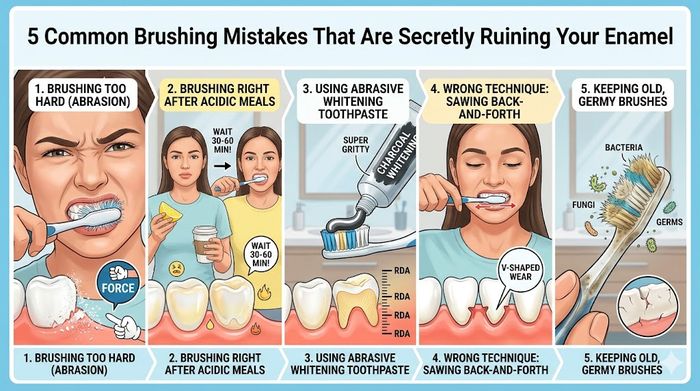
1. The "Aggressive Scrubber" Syndrome: Brushing Too Hard

There is a common misconception that the harder you brush, the cleaner your teeth will be. In reality, your teeth aren’t a kitchen floor that needs vigorous scrubbing. Enamel is incredibly tough—it's the hardest substance in the human body—but it is not invincible. Using excessive force causes what dentists call "toothbrush abrasion." This mechanical wear thins the enamel and can push back your gum line, exposing the sensitive roots of your teeth.
When you brush too hard, you’re not just removing plaque; you’re literally sanding down your teeth. Over time, this leads to a yellowish appearance because the darker dentin underneath becomes visible. To prevent this, think of brushing as a gentle massage for your teeth and gums. Most modern electric toothbrushes even come with pressure sensors that light up or vibrate when you’re pushing too hard—a feature that has saved many people from self-inflicted dental damage.
The Solution: Light Pressure and Soft Bristles
You should hold your toothbrush with the same pressure you would use to hold a pen. Let the bristles do the work. If your toothbrush bristles look splayed or flattened after only a month, you are definitely applying too much pressure. Always opt for "soft" or "extra-soft" bristles. Medium and hard bristles are generally too abrasive for daily use and are rarely recommended by dental professionals in the US.
2. Bad Timing: Brushing Right After Acidic Meals
This is perhaps the most "secret" mistake on this list. Most people think that brushing immediately after eating is the gold standard of hygiene. However, if you’ve just consumed something acidic—like orange juice, coffee, soda, or even a salad with vinaigrette—brushing right away is the worst thing you can do.
Acids temporarily soften the enamel through a process called demineralization. If you brush while the enamel is in this weakened state, you are effectively brushing the enamel right off your teeth. Your saliva needs time to neutralize the acid and re-mineralize the surface.
| Beverage/Food | Acidity Level (pH) | Effect on Enamel |
|---|---|---|
| Lemon Juice | 2.0 | Highly Erosive |
| Soda / Cola | 2.5 | Highly Erosive |
| Coffee | 4.5 - 5.0 | Moderate Risk |
| Milk | 6.7 | Safe / Protective |
The 30-Minute Rule
Wait at least 30 to 60 minutes after eating or drinking anything acidic before picking up your toothbrush. In the meantime, rinse your mouth with plain water. This helps wash away food particles and acids without the mechanical friction of brushing. This simple habit change can significantly extend the life of your enamel.
3. Using "Whitening" Toothpastes That Are Too Abrasive
Everyone wants a Hollywood smile, which has led to a massive surge in the popularity of whitening toothpastes. While these products can be effective, many of them rely on high levels of abrasives to "scrub" stains off the surface. Some ingredients, like charcoal or certain silicas, can be so gritty that they don't just remove stains—they remove the enamel itself.
The Relative Dentin Abrasivity (RDA) scale is a guide used to measure how abrasive a toothpaste is. Values over 150 are considered highly abrasive, and anything over 250 is potentially damaging. Many "extra whitening" or "charcoal" formulas push these limits. When enamel thins due to abrasion, the yellow dentin shows through more clearly, ironically making your teeth look less white in the long run.
Check the Ingredients
Look for toothpastes with the ADA (American Dental Association) Seal of Acceptance. This ensures the product has been tested for safety and effectiveness. If you have sensitive teeth, look for ingredients like potassium nitrate or stannous fluoride, which help protect and strengthen enamel rather than stripping it away.
4. Neglecting the "Back-and-Forth" Technique Fallacy
The way most of us were taught to brush as children—sawing back and forth in straight lines—is actually quite damaging. Long, horizontal strokes can cause "V-shaped" notches near the gum line, known as non-carious cervical lesions. These notches are areas where the enamel and dentin have been worn away by improper technique.
Instead, dental professionals recommend the Modified Bass Method. This involves angling the brush at a 45-degree angle toward the gum line and using small, circular motions. This technique effectively cleans the area where plaque likes to hide—the gingival sulcus—without putting undue stress on the tooth structure.
Why Circular is Better:
- It reaches slightly under the gum line to remove hidden bacteria.
- It distributes pressure more evenly across the tooth surface.
- It mimics the natural contours of your teeth and gums.
- It prevents the "notching" effect common with horizontal brushing.
5. Keeping Your Toothbrush for Too Long
How long has it been since you changed your toothbrush? If you can't remember, it's probably been too long. Most people in the US keep their brushes for six months or more, but the CDC and ADA recommend replacing them every three to four months.
There are two main reasons for this. First, worn bristles become sharp and jagged over time. Instead of gently cleaning, they begin to microscopically scratch the enamel. Second, toothbrushes are a breeding ground for bacteria, fungi, and viruses. Brushing with an old, germ-laden brush isn't just ineffective; it can contribute to oral infections and gum disease.
The After-Illness Swap
A crucial tip that many overlook: if you have been sick with a cold, flu, or sore throat, replace your toothbrush immediately after you recover. Germs can linger in the bristles, potentially leading to reinfection or a prolonged recovery.
How to Tell if Your Enamel is Already Damaged
Enamel erosion doesn't happen overnight, but there are early warning signs you should watch for. Identifying these early can help you change your habits before the damage becomes irreversible.
- Sensitivity: Sharp pain when consuming hot, cold, or sweet foods and drinks.
- Discoloration: Teeth appearing more yellow as the enamel thins.
- Transparency: The edges of your front teeth looking slightly see-through or bluish.
- Cracks and Chips: Teeth becoming more brittle and prone to minor damage.
- Rounding: The chewing surfaces of your teeth appearing "smooth" or flattened.
If you notice any of these symptoms, it’s time to consult your dentist. While they can't "grow" new enamel, they can offer treatments like bonding, crowns, or fluoride varnishes to protect the remaining structure and reduce sensitivity.

Verdict: A Proactive Approach to Your Smile
Your tooth enamel is a finite resource. Once it’s gone, the body cannot replace it. However, by avoiding these five common brushing mistakes, you can protect your smile for a lifetime. Remember: be gentle, wait after meals, choose the right tools, use circular motions, and replace your brush frequently.
Taking care of your teeth isn't about how hard you work; it's about how smart you brush. By integrating these small changes into your daily routine, you're not just cleaning your teeth—you're preserving your health, your confidence, and your smile. Start tonight by focusing on gentle, circular motions and your enamel will thank you for years to come.