
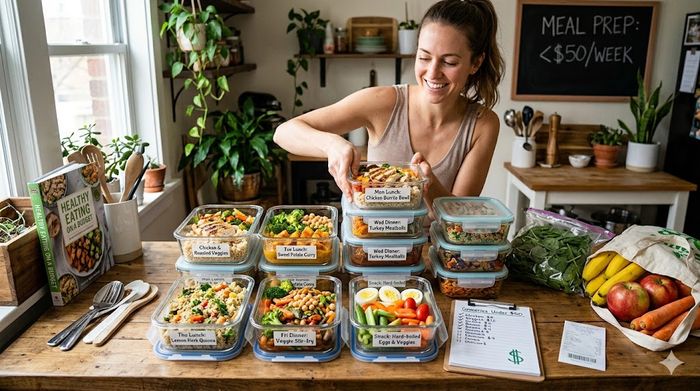
Finding the balance between eating nutritious foods and managing your household budget can often feel like walking a tightrope. In a fast-paced world where the convenience of takeout and processed foods surrounds us, sitting down to enjoy a wholesome, home-cooked meal might seem like a luxury reserved only for the wealthy or those with infinite free time. However, I am here to tell you that this simply isn't true. By mastering the art of budget meal prep, you can nourish your body with wholesome ingredients without breaking the bank. In fact, you can easily prepare a full week of healthy, satisfying meals for under $50.

If you have ever stared at your grocery receipt in sheer disbelief, wondering how a few bags of food cost so much, you are definitely not alone. Inflation and rising grocery store prices have made everyone much more mindful of their spending habits. This comprehensive guide will walk you through everything you need to know about preparing healthy meals on a strict budget, complete with a realistic $50 shopping list, step-by-step recipes, and practical tips that you can start using today.
Why Meal Prep is the Ultimate Money-Saving Strategy
Before we dive into the specific grocery lists and recipes, it is crucial to understand exactly why meal prepping is so effective at keeping your budget intact. It goes far beyond simply cooking food in advance. Meal prepping is a behavioral shift that fundamentally changes how you interact with food, money, and time.
Eliminating the Temptation of Convenience
When you arrive home from a long, exhausting day at work, the last thing you usually want to do is chop vegetables and wait for a chicken breast to bake. This exhaustion is exactly what delivery apps and fast-food drive-thrus prey upon. By having a delicious, portioned meal already sitting in your refrigerator, waiting to be heated up for two minutes in the microwave, you completely eliminate the "I am too tired to cook" excuse. Those seemingly harmless $15 lunches and $25 dinners add up to hundreds of dollars a month.
Drastically Reducing Food Waste
Have you ever bought a beautiful bundle of fresh spinach or a carton of fresh berries, only to find them wilting and molding in the back of the crisper drawer a week later? Food waste is essentially taking your hard-earned cash and throwing it directly into the trash can. When you meal prep, every single ingredient you purchase has a designated purpose. You buy exactly what you need for the recipes you have planned, ensuring that nothing gets left behind to spoil.
The Essential $50 Grocery List
To prove that this is possible, I have put together a highly versatile, nutrient-dense shopping list that typically rings up under $50 at most standard US supermarkets (such as Aldi, Walmart, or standard regional chains). This list focuses on whole foods, lean proteins, and complex carbohydrates to keep your energy levels stable all day long. Note that this list assumes you already have basic pantry staples like salt, black pepper, cooking oil (like olive or canola oil), and a few standard dried spices (like garlic powder and paprika).
| Category | Item | Estimated Price (USD) |
|---|---|---|
| Proteins | Chicken Breast (Family Pack, approx. 3 lbs) | $9.50 |
| Proteins | Large Eggs (1 Dozen) | $2.50 |
| Proteins | Canned Black Beans (2 cans) | $2.00 |
| Carbohydrates | Old Fashioned Rolled Oats (Large canister) | $4.00 |
| Carbohydrates | Brown Rice or Quinoa (1 lb bag) | $3.50 |
| Carbohydrates | Sweet Potatoes (3 lbs) | $4.00 |
| Vegetables | Frozen Mixed Vegetables (Large bag) | $3.00 |
| Vegetables | Fresh Spinach or Kale (1 large bunch/bag) | $3.00 |
| Vegetables | Carrots (Whole bag) and Onions (3 lbs) | $4.00 |
| Fruits | Bananas (1 bunch) | $1.50 |
| Fruits | Apples (3 lbs bag) | $4.50 |
| Dairy/Other | Milk (Dairy or Plant-based, 1/2 gallon) | $3.50 |
| Dairy/Other | Peanut Butter (1 jar) | $3.00 |
| Total | $48.00 |
As you can see, by sticking to the perimeter of the grocery store where the fresh, unprocessed foods live, and utilizing the freezer aisle for affordable vegetables, you can secure a vast amount of high-quality nutrition for well under the $50 threshold. This leaves a small buffer for taxes or slight regional price variations.
Your Step-by-Step Menu for the Week
Now that we have successfully gathered our ingredients, it is time to put them to work. Set aside about two hours on a Sunday afternoon to prepare these elements. Turn on your favorite podcast, put on some comfortable clothes, and let's get cooking. The goal here is batch cooking—making large amounts of base ingredients that can be mixed and matched.
Breakfast: Peanut Butter Banana Overnight Oats
Mornings are usually rushed, making breakfast the easiest meal to skip or replace with an expensive coffee shop pastry. Overnight oats are the perfect solution. They are rich in complex carbohydrates and dietary fiber, which will keep you feeling full until lunchtime.
- The Process: Take five mason jars or airtight food storage containers. In each one, add half a cup of rolled oats, one tablespoon of peanut butter, half of a mashed banana, and three-quarters of a cup of milk. Stir well, cover, and place them in the refrigerator. By morning, the oats will have absorbed the liquid, creating a creamy, delicious pudding-like texture.
- Nutrition Focus: Oats are excellent for heart health, while the peanut butter provides healthy fats and protein to slow digestion and provide sustained energy.
Lunch: Budget-Friendly Burrito Bowls
Instead of spending $12 to $15 daily on a fast-casual burrito bowl, you can make a healthier version at home for a fraction of the cost. These bowls are highly customizable and pack a fantastic nutritional punch.
- The Process: Cook your entire bag of brown rice or quinoa according to the package instructions. Rinse and drain the black beans. Take one-third of your chicken breast, season it generously with paprika, garlic powder, salt, and pepper, and bake or pan-fry until cooked through. Dice the chicken. In five containers, layer the rice, black beans, a handful of fresh spinach, and the diced chicken.
- Nutrition Focus: The combination of beans and rice forms a complete protein profile, essential for muscle repair, while the spinach adds iron and essential vitamins.
Dinner: Sheet Pan Chicken, Sweet Potatoes, and Veggies
Sheet pan meals are the crown jewel of budget meal prepping. They require minimal active cooking time, allow flavors to meld beautifully, and result in very few dishes to wash afterward.
- The Process: Preheat your oven to 400 degrees Fahrenheit. Chop the sweet potatoes and onions into bite-sized cubes. Toss them on a large baking sheet with oil, salt, and pepper. Add the remaining chicken breast (cut into chunks or left whole, depending on your preference) to the pan. Roast for about 25-30 minutes. In the last 10 minutes, add a generous portion of your frozen mixed vegetables to the pan. Portion this out into your dinner containers.
- Nutrition Focus: Sweet potatoes are a powerhouse of Vitamin A and complex carbs. The diverse colors from the mixed vegetables ensure you are getting a wide spectrum of antioxidants to support immune function.
Snacks to Bridge the Gap
Having healthy snacks readily available prevents those mid-afternoon energy crashes that send you straight to the office vending machine.
- Hard-Boiled Eggs: Boil the remaining eggs from your carton. They are nature's perfect pre-packaged protein snack.
- Apple Slices with Peanut Butter: A classic combination that balances the natural sugars and crispness of the apple with the satiating fats of the peanut butter.
- Carrot Sticks: Peel and cut your whole carrots into sticks on Sunday. Keep them in a container with a little water at the bottom to keep them incredibly crisp all week long.
Advanced Tips for Budget Optimization
If you want to stretch your dollar even further and maximize the health benefits of your meal prep routine, keep these golden rules in mind.
Embrace Frozen Fruits and Vegetables
There is a common misconception that fresh produce is always nutritionally superior to frozen. This is fundamentally incorrect. Frozen vegetables are typically flash-frozen at the peak of their ripeness, locking in vitamins and minerals. Furthermore, they are often significantly cheaper than their fresh counterparts and will never go bad in your freezer, ensuring zero waste.
Buy in Bulk and Store Properly
Items like rice, oats, dried beans, and lentils have an incredibly long shelf life. If you have the pantry space and a little extra cash one week, buy these items in the largest quantities you can find. The cost per ounce drops dramatically when you buy bulk bags compared to small, branded boxes. Store them in airtight containers to protect them from moisture and pests.
Lean heavily on Plant-Based Proteins
Meat is typically the most expensive item on any grocery receipt. By substituting chicken or beef with plant-based proteins like lentils, chickpeas, or tofu for just a few meals a week, you can slash your grocery bill considerably. Plant proteins are also rich in fiber, which is fantastic for digestive health and keeping you full.
Common Meal Prep Mistakes to Avoid
Even with the best intentions, beginners can fall into a few traps that make meal prepping feel like a chore rather than a convenience.
Overcomplicating the Recipes
When you first start, do not attempt to make five different, complex recipes with twenty ingredients each. You will end up spending six hours in the kitchen, making a massive mess, and likely burning out on the concept altogether. Stick to the basics: a protein, a complex carbohydrate, and a vegetable. You can always change up the sauces or spices to keep things interesting without adding prep time.
Ignoring Food Safety and Storage
Cooked food generally lasts 3 to 4 days in the refrigerator. If you are prepping for a full Monday-through-Friday workweek, you have two choices: either do a mini-prep session on Wednesday night to make the Thursday and Friday meals, or simply freeze the meals intended for the end of the week. Glass containers are highly recommended over plastic, as they do not stain, do not absorb odors, and are safer for microwave reheating.

Verdict: Empowering Your Wallet and Your Health
Ultimately, learning how to meal prep healthy recipes on a budget is an incredibly empowering skill. It removes the daily stress of deciding what to eat, shields your bank account from the drain of impulse food purchases, and guarantees that your body is fueled with high-quality, nutritious ingredients. By dedicating just a few hours a week to planning and cooking, you take control of your diet and your finances in a profound way. The $50 menu outlined above is proof that you do not need a massive grocery budget to prioritize your health and wellness. Start small, be consistent, and watch how quickly these healthy habits transform both your physical wellbeing and your financial stability.
