
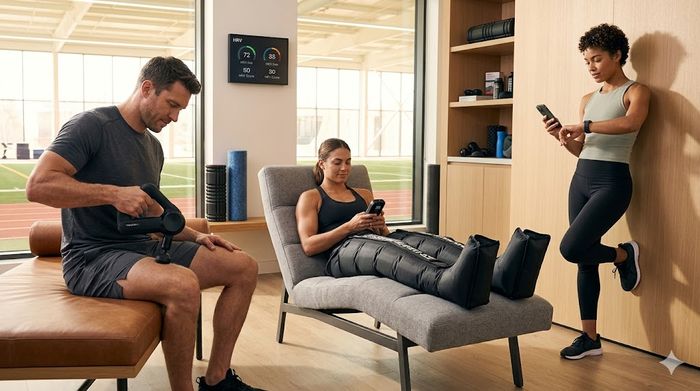
In the high-stakes world of modern fitness, the mantra "no pain, no gain" is being replaced by a more scientific approach: "recovery is where the magic happens." Whether you are a marathon runner, a weekend warrior, or a dedicated CrossFit athlete, how you treat your body after a workout determines how well you perform in the next one. The evolution of muscle recovery tech has transformed from simple ice packs and foam rollers into a sophisticated ecosystem of massage guns, pneumatic compression boots, and biometric smart wearables. This guide explores the cutting edge of recovery science to help you build a professional-grade toolkit at home.

The Rise of Percussion Therapy: Why Massage Guns Rule
Massage guns, or percussive therapy devices, have become the poster child for muscle recovery tech. But they are far more than just "vibrating hammers." These tools use rapid bursts of pressure to reach deep into muscle tissue, increasing blood flow and breaking up adhesions. The science behind it, known as the Gate Control Theory of Pain, suggests that the high-frequency vibration interferes with pain signals sent to the brain, allowing for deeper muscle work without the discomfort of a traditional deep-tissue massage.
Key Benefits of Massage Guns
- Reduced DOMS: Effectively minimizes Delayed Onset Muscle Soreness by flushing out metabolic waste.
- Improved Range of Motion: Regular use helps elongate muscle fibers and improve flexibility.
- Convenience: Provides professional-level therapy in the palm of your hand, anytime.
| Feature | Premium Models | Budget Models |
|---|---|---|
| Amplitude | 16mm (Deep) | 10-12mm (Surface) |
| Stall Force | 60+ lbs | 20-30 lbs |
| Noise Level | Ultra-Quiet | Noticeable Hum |
Compression Boots: The Secret Weapon of Pro Athletes
If you’ve seen professional NBA or NFL players relaxing in what looks like oversized astronaut pants, you’ve seen pneumatic compression boots. This technology uses sequential air pressure to massage your limbs, mimicking the body's natural lymphatic drainage. For anyone who spends a lot of time on their feet or engages in high-impact sports, these boots are a game-changer.
How Pneumatic Compression Works
The boots consist of multiple chambers that inflate and deflate in a specific pattern. This creates a "milking" effect that pushes deoxygenated blood and metabolic waste away from the extremities and toward the heart, where it can be filtered. By accelerating this process, athletes can significantly shorten the "heavy leg" feeling experienced after grueling training sessions.
Top Picks for Compression Boots in 2026
Modern units have become more portable and customizable. Leading brands now offer Bluetooth integration, allowing you to control pressure zones and session length directly from your smartphone. While a significant investment, the ability to recover while watching TV or reading a book makes them highly popular for home use.
Smart Wearables: Recovering with Data
Recovery isn't just about what you do; it's about knowing when to do it. Smart wearables—ranging from rings to wristbands—now provide "Readiness Scores" based on complex biometric data. By tracking Heart Rate Variability (HRV), sleep quality, and respiratory rates, these devices tell you if your body is ready for a PR or if you should take a rest day.
The Importance of HRV in Recovery
Heart Rate Variability is the variation in time between each heartbeat. A higher HRV generally indicates a well-rested nervous system, while a low HRV suggests stress or overtraining. Wearables have democratized this data, which was once only available to elite sports scientists, putting the power of informed recovery into everyone's hands.
Advanced Tech: Infrared and EMS
Beyond the mainstream tools, two other technologies are gaining traction: Near-Infrared Light Therapy (Red Light) and Electrical Muscle Stimulation (EMS). Red light therapy penetrates the skin to stimulate cellular energy production (ATP), helping repair damaged tissue at a microscopic level. Meanwhile, EMS devices use small electrical pulses to cause muscle contractions, which can keep muscles active without adding stress to the joints.
Creating Your Personalized Recovery Routine
The best recovery tech is the one you actually use. You don't need every gadget on the market. Start with a massage gun for targeted relief and a wearable to track your sleep. As you progress, consider adding compression boots for lower body recovery. Remember that tech is a supplement to—not a replacement for—proper nutrition, hydration, and 7-9 hours of quality sleep.
The Ethical Integration of Biohacking
As we integrate more technology into our health journey, it is vital to listen to our bodies first. Data is a guide, but your intuition is the master. If your wearable says you are "100% ready" but your joints feel stiff, trust your feeling and take it easy. The goal of muscle recovery tech is to enhance your longevity and enjoyment of movement, not to turn fitness into a chore of data management.

The Verdict: Investing in Your Future Self
Muscle recovery technology has reached a tipping point where professional-grade tools are accessible to the general public. While the initial cost of high-end massage guns and compression boots may seem high, they pay for themselves in reduced injury risk and improved performance over time. By combining percussive therapy, pneumatic compression, and smart data tracking, you are not just recovering—you are optimizing your body for the long haul. Choose the tools that fit your lifestyle and watch your athletic potential reach new heights.