
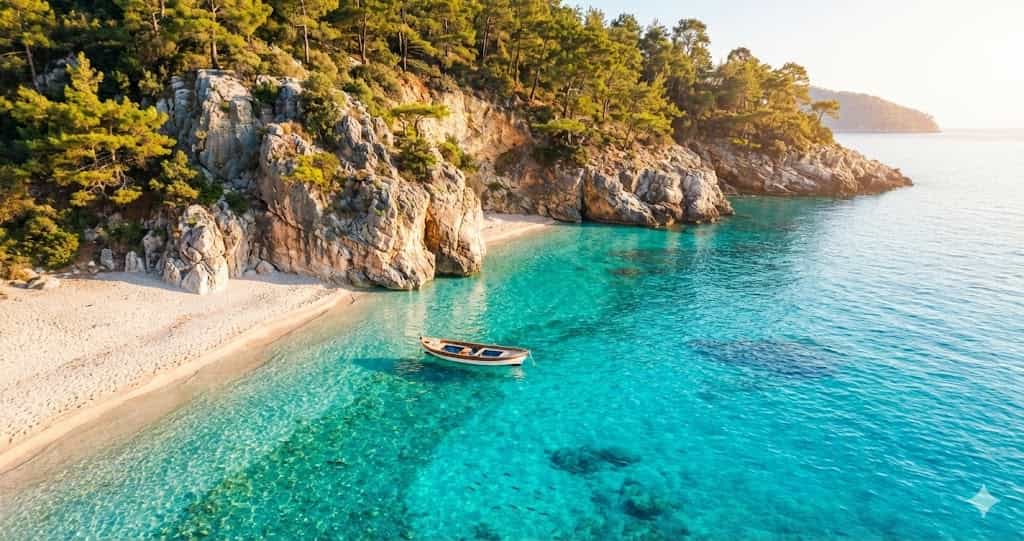
Who is this for? This comprehensive guide is designed for sun-seekers, families, and nature enthusiasts planning a trip to the Turkish Riviera who value water clarity, safety, and authentic experiences over crowded tourist traps.
🕒 Estimated Reading Time: 12 minutes 📅 Last Updated:
I have traveled across the Mediterranean, exploring countless coastlines, but few places have captured my heart quite like the Turquoise Coast of Turkey. If you are searching for the most beautiful beaches in Antalya with crystal-clear water, you have arrived at the definitive resource. From the bustling shores of the city center to hidden coves accessible only by boat or winding mountain roads, Antalya offers a spectrum of blue that defies imagination.
What Defines Antalya's Water?
The water in Antalya is renowned for its high salinity and lack of strong currents in the protected bays, leading to exceptional visibility often exceeding 30 meters. The pebble composition of many beaches, unlike fine sand, prevents sediment from clouding the water, creating that signature "glass-like" transparency known globally as the Turquoise Effect.
Key Takeaways
- ✨ Kaputas Beach is the "Instagram King" with the most vibrant turquoise color.
- 🏖️ Konyaalti offers the best accessibility directly from Antalya city center.
- 🐢 Patara provides 18km of sand and is a protected nesting ground.
- 🏛️ Phaselis combines ancient ruins with swimming in calm bays.
1. Kaputas Beach: The Turquoise Wonder
If you have seen a postcard of Turkey, you have likely seen Kaputas (pronounced Ka-pu-tash). Located dramatically between Kas and Kalkan, this small cove sits at the mouth of a deep gorge. The water here is not just clear; it is an electric, milky turquoise that seems almost artificial to the naked eye.
This unique coloration is caused by cool mountain spring water mixing with the sea, keeping the temperature refreshing even in the peak of August. It is widely considered the crown jewel of the Turkish Riviera.
Getting to the beach requires descending approximately 187 steps from the main road. The view from the top is breathtaking and serves as one of the most popular photography spots in the entire Mediterranean region. While there are facilities including toilets and showers run by the municipality, they maintain a low profile to avoid ruining the natural aesthetic.
✅ Pros
- Unmatched watercolor and clarity.
- Dramatic cliff scenery for photography.
- Clean facilities managed by the municipality.
❌ Cons
- 187 steps to walk down (and climb back up!).
- Extremely limited parking on the curve of the road.
- Water gets deep very quickly; not ideal for toddlers.
2. Konyaalti Beach: City Convenience
For those staying in the city center, Konyaalti Beach is nothing short of a miracle. It is rare to find a pristine, Blue Flag certified beach stretching 7km right alongside a bustling metropolis. The backdrop of the Beydağları Mountains rising straight from the sea creates a stunning visual contrast.
Because it is a pebble beach, the sediment settles instantly, making it one of the cleanest urban beaches in the world. You might even spot small fish known scientifically as Diplodus vulgaris swimming right near the shore. The recently renovated promenade features parks, cafes, and running tracks, making it a full-day destination.
3. Phaselis: Swimming in History
Imagine swimming through an ancient harbor where Alexander the Great once walked during his winter campaigns. Phaselis offers a unique combination of archaeology and leisure. Located near Kemer, this ancient Lycian city features three distinct bays: the North, Central, and South Harbors.
The South Harbor is the most popular for swimmers due to its sandy bottom and shallow, warm water, making it perfect for families with small children. The surrounding pine forest provides natural shade, a rarity on many Mediterranean beaches. You can snorkel over the remains of the ancient breakwater, literally swimming through history.
4. Comparison: Which Beach is For You?
| Beach Name | Surface Type | Water Clarity (1-10) | Best For |
|---|---|---|---|
| Kaputas | Golden Pebbles | 10/10 | Couples, Photography |
| Konyaalti | Grey Pebbles | 9/10 | City Lovers, Convenience |
| Phaselis | Sand & Pebble Mix | 8/10 | Families, History Buffs |
| Lara Beach | Dark Sand | 7/10 | Luxury Resorts, Kids |
5. Patara Beach: Endless Sand
Stretching for 18 kilometers, Patara holds the title of the longest beach in Turkey. Unlike the pebble beaches of the west, Patara offers soft, fine sand. Part of a National Park, it remains gloriously untouched by mass hotel construction, preserving a wild, desert-like atmosphere.
While the open sea here can sometimes be wavy, stirring up the sand, on calm days the transparency is remarkable. It is also a critical protected nesting ground for the endangered loggerhead sea turtle (Caretta caretta). Because of this, access to the beach is restricted at night to allow the turtles to nest in peace.
🤔 Myth vs. Reality
Myth: You need to stay at an expensive 5-star resort to access the nicest beaches in Antalya.
Reality: The absolute best beaches (Kaputas, Patara, Cirali) are public beaches with minimal entry fees or are completely free of charge.
6. How to Plan the Perfect Beach Day
Planning a trip to these spots requires some strategy to avoid the crowds and the heat. Here is my personal formula for success:
- Timing is Everything: Arrive at Kaputas before 09:30 AM. By noon, the parking on the cliff edge is chaotic, and the sun is at its peak.
- Footwear: Invest in decent water shoes (sea shoes). The "sand" at many of these crystal-clear spots is actually tiny pebbles that can be hard on soft feet, especially when hot.
- Hydration: Beaches like Patara have limited facilities that can be far from the shoreline. Bring at least 2 liters of water per person.
- Rent a Car: While buses ("dolmus") run frequently, a car gives you the freedom to explore the stunning coastal road (D400), often cited by Lonely Planet as one of the most scenic drives in the world.
"Pro Tip: If you love snorkeling, skip the sandy Lara Beach. Instead, head to the rocky coves of Kas or the sunken city near Kekova. The visibility there allows you to see amphorae on the seabed from the surface!" - Sorin Stanisel, Travel Specialist
- Mavi Bayrak (Blue Flag)
- An international certification that a beach meets high standards of environmental management, safety, and water quality.
- Dolmus
- Shared minibusses that are the primary mode of public transport in Turkey. They are cheap, frequent, and an experience in themselves.
7. Frequently Asked Questions
Is it safe to swim in Antalya?
Yes, generally it is very safe. Sharks are extremely rare in these waters. However, be mindful of sudden depth changes at pebble beaches like Konyaalti and occasional jellyfish in late summer.
When is the best time to visit for swimming?
The swimming season is long, stretching from May to November. For the clearest water and fewer crowds, I recommend aiming for late September or October, when the sea is still warm but the summer haze has cleared.
Do I need to pay to enter these beaches?
It depends. Konyaalti and Kaputas are public beaches and are free to enter (though renting sunbeds and umbrellas costs money). Phaselis and Patara require a small entry fee because they are located within archaeological sites or national parks. If you have a Museum Pass Turkey, entry is often included.
Final Verdict
If you prioritize crystal-clear water above all else, your destination must be Kaputas Beach or the rocky coves of Kas. However, for a perfect balance of history, nature, and calm swimming suitable for the whole family, Phaselis is the unmissable gem of the region.
Ready to go? Don't forget to check the PADI guides if you plan on diving to see the underwater wonders!
Disclaimer: This article is based on personal travel experience and verified data as of late 2025. Beach conditions, prices, and accessibility rules may change. Always check local official sources before traveling.
Sources & References:
- UNESCO World Heritage Centre - Xanthos-Letoon (Patara region).
- GoTurkiye - Official Tourism Portal of Turkey.
- Blue Flag Global - International Beach Database.