
I know how overwhelming it can feel to start a new fitness journey, especially when it comes to flexibility. Between busy work schedules, long commutes, and the demands of daily life, finding time for self-care often feels impossible. You might look at experienced yogis online and think that achieving that level of flexibility requires hours of grueling practice every single day. I am here to tell you that this is simply not true. You do not need to spend hours on a yoga mat to see real, tangible results. In fact, a consistent 15-minute daily yoga routine for beginners is often much more effective for boosting flexibility than a sporadic 60-minute session once a week.

The secret lies in the incredible adaptability of your nervous system and your body's connective tissues. When we sit at desks or in cars for extended periods, our muscles adapt to those shortened positions. This is why you feel stiff when you wake up or after a long day at the office. By introducing a gentle, targeted 15-minute daily yoga routine into your schedule, you are sending a daily signal to your nervous system that it is safe to release tension and lengthen those muscle fibers. Consistency is the true key to unlocking your body's potential.
The Science Behind a 15-Minute Daily Yoga Routine
Before we dive into the poses, it is important to understand why this specific approach works so well. Flexibility is not just about physically pulling a muscle to make it longer; it is primarily a neurological process. Your muscles have sensors called muscle spindles that protect them from tearing. When you stretch too fast or too intensely, these spindles trigger a stretch reflex, causing the muscle to contract and resist the stretch. This is why aggressive stretching often leads to more stiffness or even injury.
A gentle 15-minute daily yoga routine bypasses this defense mechanism. By holding simple poses and focusing on deep, rhythmic breathing, you activate the parasympathetic nervous system—your body's "rest and digest" mode. This signals to the muscle spindles that you are safe, allowing them to relax and permit a deeper, more permanent lengthening of the muscle tissue. Over time, your body establishes a new "normal" resting length for your muscles.
Furthermore, daily movement lubricates your joints by stimulating the production of synovial fluid. Think of this fluid as oil for the hinges of a door. If you only open the door once a week, it will squeak and resist. If you open it a little bit every day, it swings smoothly. The same applies to your hips, shoulders, and spine. This is why a short, daily commitment is far superior for beginners looking to boost flexibility and overall mobility.
Preparing for Your Flexibility Journey
You do not need an expensive studio membership, fancy clothing, or specialized equipment to begin. The beauty of this 15-minute daily yoga routine is its accessibility. However, setting yourself up for success requires a little bit of mindful preparation.
- Find Your Space: Choose a quiet corner of your home where you can roll out a yoga mat without hitting furniture. Having a dedicated, visually clean space can help signal to your brain that it is time to wind down and focus.
- Choose the Right Time: The best time to do this routine is the time you will actually stick to. Many people find that doing it first thing in the morning helps them wake up stiff muscles and set a positive tone for the day. Others prefer the evening to decompress and release the physical tension accumulated from work. Pick a 15-minute window and protect it fiercely.
- Gather Basic Props: While not strictly necessary, having a couple of yoga blocks (or thick books) and a yoga strap (or a belt/towel) can make a world of difference for a beginner. These tools bring the floor closer to you and help you maintain proper alignment without straining.
- Focus on the Breath: In yoga, the breath is the bridge between the mind and the body. Before you start moving, take one minute to simply sit comfortably and observe your breathing. Inhale deeply through your nose, expanding your belly, and exhale slowly through your nose. This type of breathing will be your anchor throughout the routine.
The Ultimate 15-Minute Daily Yoga Routine for Beginners
This sequence is designed to target the major areas where we hold the most tension: the hips, hamstrings, lower back, and chest. I recommend moving through these poses slowly, holding each for about 5 to 10 deep breaths (roughly 1 to 2 minutes per pose). Never push into pain; look for a sensation of a mild, manageable stretch.
1. Child's Pose (Balasana)
We begin on the floor in a posture of complete surrender. Kneel on your mat, bring your big toes to touch, and widen your knees about hip-distance apart. As you exhale, slowly lower your torso between your thighs and extend your arms long in front of you. Rest your forehead on the mat. If your forehead does not reach the mat, place a block or a folded blanket underneath it. Child's pose gently stretches the hips, thighs, and ankles while relieving back and neck pain. Stay here for 2 minutes, focusing on expanding your ribcage sideways with every inhale.
2. Cat-Cow Stretch (Marjaryasana-Bitilasana)
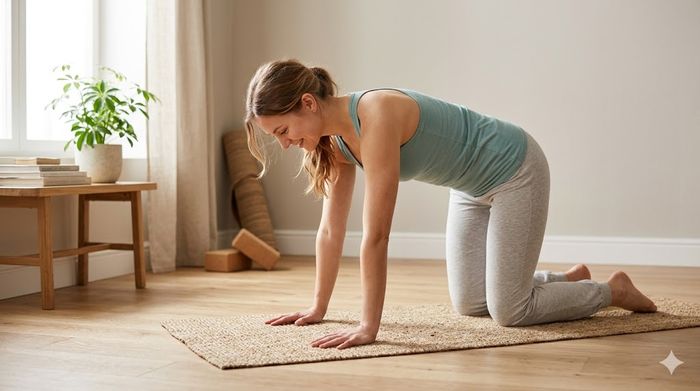
Slowly transition onto your hands and knees in a tabletop position. Ensure your wrists are directly under your shoulders and your knees are directly under your hips. As you inhale, drop your belly towards the floor, lift your chest, and look up slightly (Cow Pose). As you exhale, press into your hands, round your spine toward the ceiling, and tuck your chin to your chest (Cat Pose). Move fluidly between these two shapes, letting your breath dictate the speed of the movement. This dynamic flow takes about 2 minutes and is incredible for warming up the spine and stretching the torso and neck.
3. Downward-Facing Dog (Adho Mukha Svanasana)
From your tabletop position, tuck your toes under, press firmly into your palms, and lift your hips up and back. Your body should form an inverted "V" shape. As a beginner, it is crucial to keep a generous bend in your knees. Do not worry about getting your heels to the floor; that is a common misconception. Focus instead on pressing your chest toward your thighs to create a long, straight line from your wrists to your tailbone. You can "pedal" your feet by bending one knee and pressing the opposite heel down. Hold and explore this pose for 2 minutes. It provides a phenomenal stretch for the hamstrings, calves, and shoulders.
4. Low Lunge (Anjaneyasana)
From Downward-Facing Dog, step your right foot forward between your hands. Gently lower your left knee to the mat (pad it with a blanket if you experience any knee discomfort). Untuck your back toes. Keep your hands on the mat framing your front foot, or use blocks under your hands to keep your chest lifted. Sink your hips forward and down slightly until you feel a deep stretch in the front of your left hip and thigh (the hip flexor). Hold for 1 minute, then carefully switch sides and hold for another minute. This pose counteracts the effects of prolonged sitting perfectly.
5. Seated Forward Fold (Paschimottanasana)
Transition to a seated position with both legs extended straight out in front of you. Flex your feet so your toes point toward the ceiling. Inhale and sit up as tall as you can. Exhale and slowly hinge forward from your hips, keeping your spine straight. Do not round your upper back just to reach your toes. Instead, let your hands rest wherever they fall naturally—on your shins, ankles, or thighs. If you have a yoga strap, loop it around the balls of your feet and hold the ends. Breathe deeply into the stretch for 2 minutes, allowing gravity to gently open up your hamstrings and lower back.
6. Supine Spinal Twist (Supta Matsyendrasana)
Lie down flat on your back. Hug your right knee into your chest, keeping your left leg extended straight on the floor. Extend your right arm out to the side in a "T" shape. Using your left hand, gently guide your right knee across your body toward the left side of the room. Keep both shoulders anchored to the mat; it is okay if your right knee does not touch the floor. Turn your head to gaze over your right shoulder. This twist wrings out tension in the spine and massages the abdominal organs. Hold for 1 minute, then switch to the left side for another minute.
7. Corpse Pose (Savasana)
Finally, release the twist and lay completely flat on your back. Separate your legs slightly and let your feet flop open. Rest your arms alongside your body with your palms facing up. Close your eyes and let go of any controlled breathing. This is the most important pose of the routine. It gives your body and nervous system 3 minutes to integrate the physical benefits of the stretches you just performed. Allow yourself to sink heavily into the floor, completely relaxing every muscle from your toes to your jaw.
Modifications for Stiff Muscles
I want to emphasize that feeling stiff is not a failure; it is simply your starting point. If you find any of the poses above too intense, modifying them is the smartest thing you can do to boost flexibility safely.
| Yoga Pose | Common Beginner Struggle | Effective Modification |
|---|---|---|
| Child's Pose | Hips don't reach heels; tight ankles. | Place a rolled blanket between your calves and hamstrings. |
| Downward Dog | Tight hamstrings causing a rounded spine. | Bend knees generously; place hands on yoga blocks. |
| Seated Forward Fold | Cannot reach toes; lower back rounds. | Sit on the edge of a folded blanket to tilt the pelvis forward; use a strap. |
| Low Lunge | Knee pain on the mat; balance issues. | Double up the yoga mat under the back knee; use blocks for hands. |
Using props like blocks, straps, and blankets does not mean you are "bad" at yoga. On the contrary, using props shows a deep understanding of your body's current needs and allows you to experience the full benefit of the posture without strain.
Common Mistakes to Avoid in Your Practice
When trying to boost flexibility, beginners often fall into a few common traps that can hinder their progress or lead to injury. Being aware of these pitfalls will help you get the most out of your 15-minute daily yoga routine.
First, never force a stretch. The "no pain, no gain" mentality has absolutely no place in yoga. If you push a muscle past its comfortable limit, it will contract in self-defense, defeating the purpose of the stretch. You should feel a dull, broad sensation of tension, never a sharp, pinpointed pain. If you wince, you have gone too far.
Second, remember to breathe. It is very common to instinctively hold your breath when a stretch becomes challenging. However, holding your breath triggers the "fight or flight" response, tightening your muscles further. If you find that you cannot maintain a steady, fluid breath, back out of the pose slightly until you can.
Lastly, avoid comparing your chapter one to someone else's chapter twenty. In the age of social media, it is easy to look at images of extreme flexibility and feel inadequate. Remember that bone structure, joint depth, and years of practice all play a role in how a pose looks. Focus on how the pose feels in your body, not how it looks from the outside.
How to Stay Consistent with Your Flexibility Goals
Knowing the poses is only half the battle; doing them consistently is the real challenge. To ensure you actually complete your 15-minute daily yoga routine, I highly recommend a technique called "habit stacking."
Habit stacking involves attaching your new desired habit (yoga) to an existing habit you already do every single day without fail. For example, if you always drink a cup of coffee in the morning, commit to doing your 15-minute routine while the coffee is brewing. If you always watch a specific television show in the evening, do your routine on the living room floor while you watch. By linking the new habit to an established one, you dramatically increase your chances of long-term success.
| Week | Focus Area | Expected Benefits |
|---|---|---|
| Week 1 | Establishing the daily habit, learning the poses. | Better sleep, slight reduction in daily stress levels. |
| Week 2 | Deepening the breath, refining physical alignment. | Noticeably less stiffness in the morning, improved posture. |
| Week 3 | Noticing subtle increases in range of motion. | Ability to reach slightly further in stretches without pain. |
| Week 4 | Feeling confident in the routine without guidance. | Significant boost in overall flexibility, lighter feeling joints. |

Verdict and Final Thoughts
Embarking on a journey to boost your flexibility does not require a massive overhaul of your life. By dedicating just a fraction of your day to this simple, straightforward 15-minute daily yoga routine, you are making a profound investment in your physical and mental well-being. This sequence effectively targets the areas most affected by our modern, sedentary lifestyles—opening the hips, releasing the spine, and lengthening the hamstrings.
Remember that flexibility is a slow, steady process of inviting the body to open up, not forcing it into submission. Be patient with yourself, utilize modifications and props without hesitation, and prioritize deep, intentional breathing over achieving a perfect shape. If you commit to showing up on your mat for just 15 minutes a day, you will soon discover a newfound sense of space, mobility, and ease within your own body. Start today, and let the gentle consistency transform your flexibility.
