
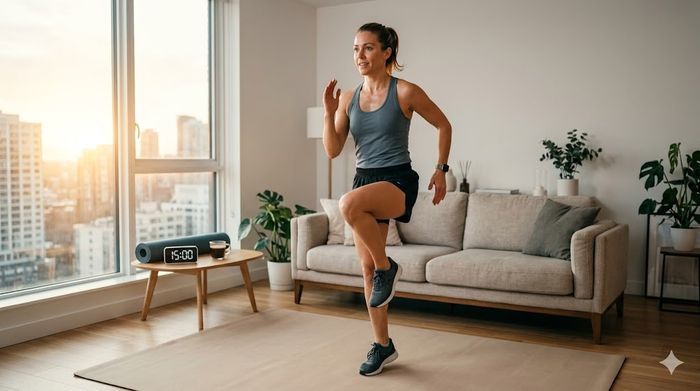
Waking up in a fast-paced environment often feels like a race against the clock. Between checking emails, preparing breakfast, and getting ready for the day, exercise often takes a back seat. However, physical activity is the very fuel that makes a busy schedule manageable. You don't need a gym membership, expensive heavy machinery, or even a full hour to reap the rewards of a disciplined fitness life. This 15-minute no-equipment home workout is designed specifically for those who demand efficiency without sacrificing results. By utilizing high-intensity intervals and functional bodyweight movements, you can trigger a metabolic boost that lasts long after your shower.
)
The Science of 15-Minute Morning Workouts
You might wonder if 15 minutes is truly enough to make a difference. The answer lies in exercise intensity and hormonal response. Short, vigorous bursts of activity trigger "Excess Post-exercise Oxygen Consumption" (EPOC), commonly known as the afterburn effect. This means your body continues to burn calories at an elevated rate for hours as it works to return to its resting state. Furthermore, a morning workout optimizes your circadian rhythm, leading to better focus and more stable energy levels throughout the day.
When you engage in multi-joint movements like squats or push-ups, you are recruiting large muscle groups. This creates a systemic demand that strengthens the cardiovascular system while building functional lean muscle. In the United States, where "time poverty" is a significant barrier to health, this micro-workout approach is a game-changer for long-term wellness.
Mental Benefits for the Busy Professional
Beyond the physical, the mental clarity provided by a quick morning session is unparalleled. Exercise releases endorphins and reduces cortisol levels, providing a natural "buffer" against the stresses of corporate meetings or family responsibilities. It creates a sense of accomplishment before 9:00 AM, fostering a proactive mindset that translates into higher productivity and better decision-making.
The Essential Components of Your Routine
To maximize these 15 minutes, the routine must be structured to touch on three main pillars: strength, cardiovascular endurance, and core stability. Since we are using no equipment, we rely on gravity and body positioning to create resistance.
- Lower Body: Exercises like air squats and lunges to fire up the glutes and quads.
- Upper Body: Push-up variations to target the chest, shoulders, and triceps.
- Core: Planks and leg raises to stabilize the spine and improve posture.
- Cardio Bursts: High knees or mountain climbers to keep the heart rate in the fat-burning zone.
The 15-Minute Routine Breakdown
We will follow a circuit-style format. Perform each exercise for 45 seconds, followed by 15 seconds of rest. Complete the entire circuit twice. This structure ensures you stay moving while allowing brief recovery windows to maintain form.
| Exercise | Duration | Focus Area |
|---|---|---|
| Air Squats | 45 Seconds | Quads & Glutes |
| Standard Push-ups | 45 Seconds | Chest & Arms |
| Alternating Lunges | 45 Seconds | Balance & Legs |
| Mountain Climbers | 45 Seconds | Cardio & Core |
| Forearm Plank | 45 Seconds | Abdominals |
| Burpees (Modified) | 45 Seconds | Full Body Explosiveness |
Step-by-Step Exercise Guide
1. Air Squats
Stand with your feet shoulder-width apart. Lower your hips as if sitting back into a chair, keeping your chest up and your weight on your heels. Ensure your knees do not cave inward. Push through your heels to return to a standing position. This movement builds the foundation of functional strength.
2. Standard Push-ups
Assume a plank position with hands slightly wider than shoulders. Lower your body until your chest nearly touches the floor, keeping your elbows at a 45-degree angle. If this is too challenging, drop to your knees while maintaining a straight line from head to knees.
3. Alternating Lunges
Step forward with one leg and lower your hips until both knees are bent at a 90-degree angle. Keep your front knee directly above your ankle. Push back to the starting position and switch legs. This improves hip mobility and unilateral strength.
Nutrition Strategies for the Morning Rush
To complement your 15-minute workout, your nutrition should be equally streamlined. Should you workout fasted? For many, training on an empty stomach in the morning can enhance fat oxidation. However, if you find your energy lagging, a small snack like a banana or a handful of almonds 30 minutes before can provide the necessary glucose.
Post-workout, prioritize high-quality protein and complex carbohydrates. A quick protein shake or Greek yogurt with berries will help repair muscle tissues and replenish glycogen stores. Hydration is also paramount; drinking 16 ounces of water immediately upon waking will kickstart your metabolism and ensure your cells are hydrated for the intensity ahead.
Setting Up Your Home Space for Success
The beauty of a no-equipment workout is that any small space—your living room, bedroom, or even a hotel room—becomes your gym. To ensure consistency, create a designated "workout zone." Clear away any clutter the night before so that there are no physical or mental barriers when your alarm goes off.
Consider playing a high-energy playlist or a motivational podcast. Creating a "ritual" around these 15 minutes helps the brain transition into "work mode." In the United States, where home sizes vary greatly, knowing that you only need a space the size of a yoga mat makes this routine accessible to everyone from city apartment dwellers to suburban homeowners.
Common Mistakes and How to Avoid Them
When time is short, the temptation to rush through movements is high. However, poor form is the fastest way to stall progress or cause injury.
- Sacrificing Depth for Speed: In squats, ensure you are reaching a full range of motion. Half-squats yield half-results.
- Holding Your Breath: Focus on rhythmic breathing. Inhale on the relaxation phase and exhale on the exertion phase.
- Skipping the Warm-up: Even in a 15-minute window, take 60 seconds to roll your shoulders and swing your legs to prevent strains.
Consistency is far more important than perfection. If you can only manage 10 minutes one day, do 10 minutes. The goal is to build the habit of movement, making fitness an non-negotiable part of your morning identity.
Overcoming the "I Have No Time" Myth
Many Americans spend more than 15 minutes scrolling through social media or checking news feeds before they even get out of bed. Reclaiming this time for physical health is a choice that pays dividends in longevity and life satisfaction. When you realize that 15 minutes is only about 1% of your entire day, the excuse of having "no time" begins to fade.
The psychological shift from "I have to work out" to "I get to start my day with energy" is profound. This routine isn't just about weight loss or muscle tone—it's about personal empowerment. It’s about taking control of your health in a world that constantly tries to pull your attention elsewhere.
)
Final Verdict: Efficiency Meets Excellence
The Ultimate 15-Minute No-Equipment Home Workout is more than just a quick fix; it is a sustainable strategy for lifelong health. By focusing on high-quality movements and maintaining a consistent schedule, you can achieve a level of fitness that many believe requires hours of gym time. The benefits extend beyond the mirror, touching your mental health, professional focus, and overall vitality. For more health tips and professional guidance, visit SorinBlogger. Stop waiting for the "perfect time" to start and embrace the power of the next 15 minutes. Your future self will thank you.
